

City Guide · 12 min read
Post-study work rightsMulticultural student lifePublic transitResearch strengthWinter internships in finance and techA large international student community
Toronto is Canada’s largest city and its financial and cultural capital, home to the University of Toronto, consistently ranked among the world’s top research universities. It combines a generous post-study work permit system, one of the most multicultural populations of any major city, and direct access to Canada’s biggest concentration of finance, tech, and healthcare employers. The trade-offs: winters are long and cold, and housing costs in the city core have climbed sharply over the past decade, pushing many students toward a longer commute from more affordable areas.

Country Context: Canada
- Student Visa: Requires a study permit, applied for after receiving an acceptance letter from a Designated Learning Institution (DLI); most applicants also need a biometrics appointment.
- Post-Study Work Rights: The Post-Graduation Work Permit (PGWP) is one of the most generous post-study routes globally: its length is tied to your programme length, from 8 months up to 3 years, and master’s graduates receive a 3-year permit regardless of how long the programme itself took.
- Primary Language: English (French in Quebec). Toronto operates almost entirely in English.
- Healthcare System: Ontario’s provincial health plan (OHIP) generally does not cover international students; most universities require enrolment in UHIP, a mandatory supplementary health insurance plan.
Key Takeaways
- The PGWP is one of the most generous post-study work permits available anywhere, up to 3 years for master’s graduates regardless of programme length.
- University of Toronto tuition varies sharply by faculty, from roughly CAD 53,000 to over CAD 70,000/year for international undergraduates, so the specific programme matters as much as the university.
- Toronto’s finance, tech, and healthcare sectors give students direct access to internships and entry-level roles without leaving the city.
- Housing in the city core has become expensive; many students find real savings by commuting in from more affordable neighbourhoods via the TTC.
Education
Excellent
Home to a globally top-ranked research university with genuine strength across engineering, business, medicine, and the sciences, plus several other respected institutions in the metro area.
Cost of Living
Mixed
One of the more expensive Canadian cities, with rent and daily costs that can rival some US peer cities, though still generally below London or Hong Kong.
Housing
Mixed
Genuine competition for student housing near campus, with rents that have risen sharply; commuting from outer neighbourhoods is a common, viable trade-off.
Transportation
Very Good
The TTC’s subway, streetcar, and bus network covers the city thoroughly, and the downtown campus area is highly walkable.
Safety
Very Good
Consistently rated one of the safer major cities in North America, including in and around the main university areas.
Healthcare
Very Good
Strong hospital and research infrastructure, though international students need mandatory supplementary insurance since provincial coverage generally doesn’t apply to them.
Employment & Work Opportunities
Excellent
Canada’s largest concentration of finance, tech, and healthcare employers sits directly in the city, giving students real internship and co-op access without relocating.
Student Lifestyle
Very Good
A large, international student population and one of the most multicultural cities in the world create an unusually broad range of communities to plug into.
Climate
Mixed
Long, cold winters with real snow, balanced by a warm, humid summer; spring and autumn are the most comfortable stretches of the year.
Student Essentials
Monthly Budget
- Accommodation (shared/dorm)CAD 1,300
- FoodCAD 450
- Transit Pass (TTC)CAD 128
- Phone & InternetCAD 70
- EntertainmentCAD 180
- TotalCAD 2,128
Working While Studying
- Hours Allowed: Up to 24 hours per week off-campus during term for study permit holders, full-time during scheduled breaks, no separate work permit required.
- Common Jobs: Retail, hospitality, and campus roles are common early on; co-op placements and internships in finance, tech, and healthcare open up as students progress through their programme.
- Tax Notes: International students must file a Canadian tax return annually and will need a Social Insurance Number (SIN) before starting any paid work.
Scholarships
Application Routes Worth Knowing
- Lester B. Pearson International Scholarship: University of Toronto’s flagship award for incoming international undergraduates, covering full tuition, books, and incidental fees for four years, considered automatically alongside admission.
- Vanier Canada Graduate Scholarships: A federal government award for doctoral students, highly competitive and applied for through the university’s graduate office rather than directly.
- Faculty-Specific Entrance Awards: Many faculties run their own merit scholarships for international students; worth checking each faculty’s own admissions page directly rather than assuming one central list covers everything.
Visa Requirements
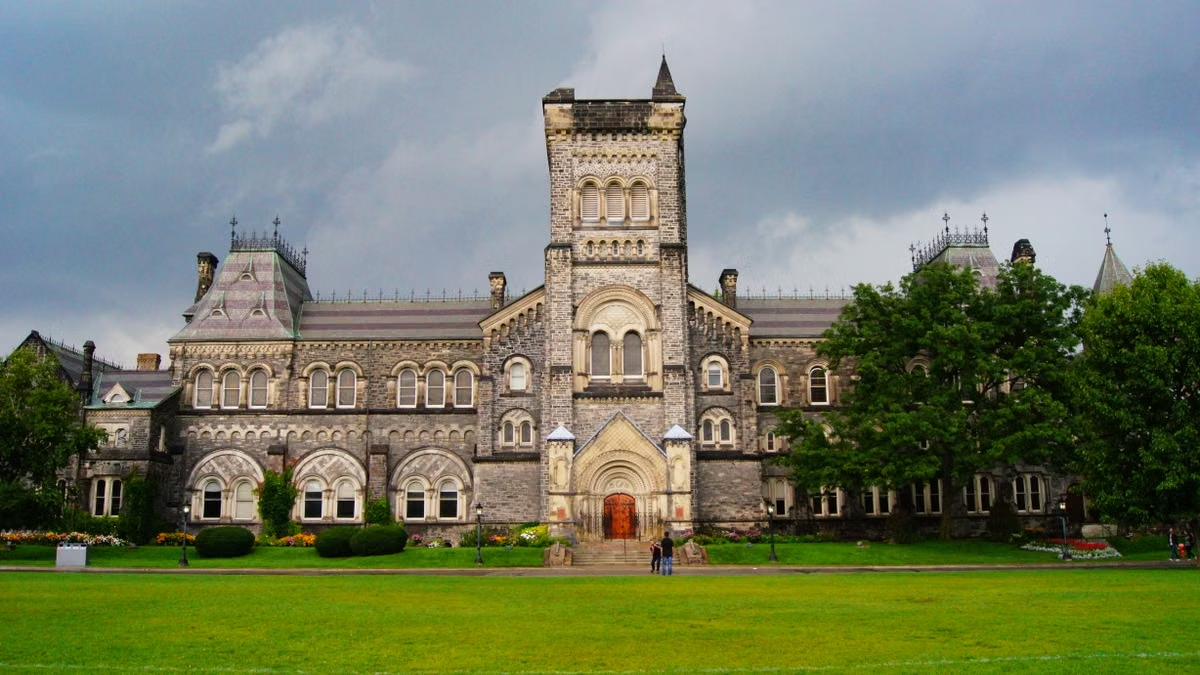
University of Toronto
Canada’s highest-ranked university and a genuine global research powerhouse, with international undergraduate tuition ranging roughly CAD 53,000-70,000/year depending on faculty.
- Engineering
- Business (Rotman)
- Medicine
- Computer Science
Toronto Metropolitan University
A large downtown university known for practical, industry-connected programmes and one of Canada’s most active entrepreneurship and incubator ecosystems.
- Media
- Business
- Engineering
- Architectural Science
York University
One of Canada’s largest universities, with an international student body and strong programmes in law, business, and the arts at a lower cost than downtown institutions.
- Law (Osgoode Hall)
- Business (Schulich)
- Fine Arts
- Environmental Studies
Also in this pillar
University Halls vs Private Renting for Your First Year Abroad
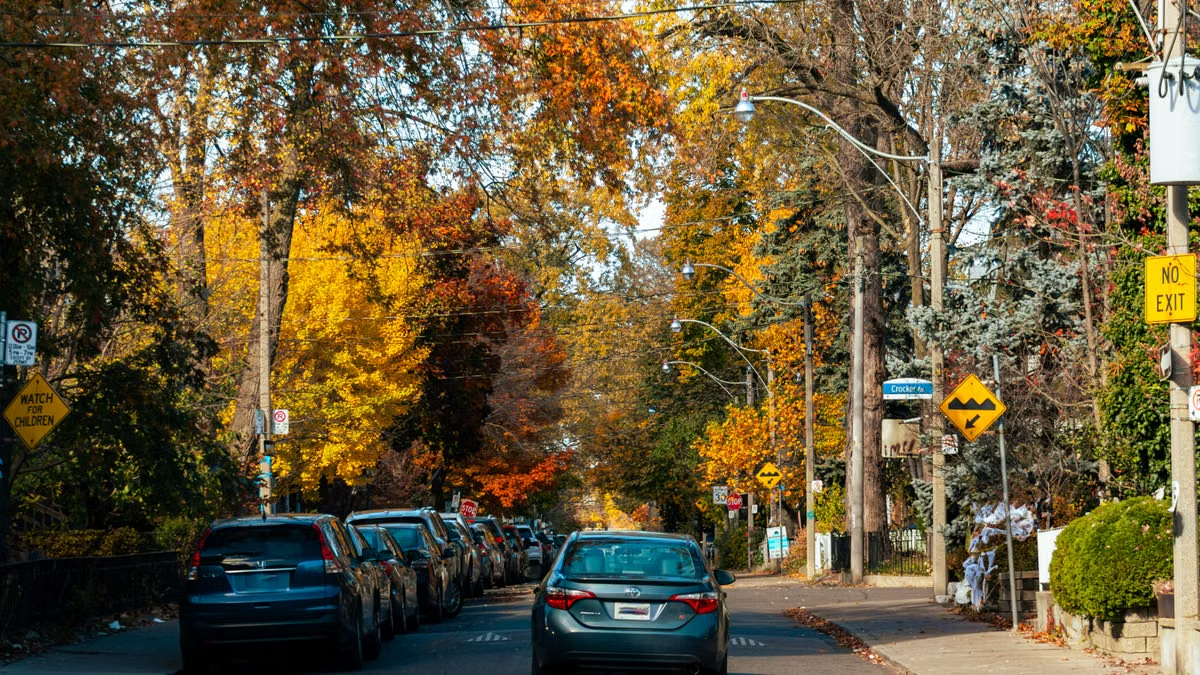
Neighbourhoods to Consider While Studying in Toronto
There’s no single right answer here, so we’ve picked four areas that each do one thing particularly well. Whichever priority matters most to you, cost, lifestyle, space, or commute time, one of these should fit.
The Annex
Best for Shortest Commute
The neighbourhood directly north of University of Toronto’s downtown campus, dense with student housing and a short walk to lectures.
Kensington Market & College Street
Best for Social & Cultural Life
A vibrant, eclectic area of independent shops, cafes, and a diverse food scene, popular with students wanting real city character close to campus.
Scarborough
Best for Budget-Conscious Students
A large, more affordable district connected to downtown by subway and rail, with noticeably lower rents than the immediate campus area.
North York
Best for Grad Students Wanting Space
A quieter, more residential district with larger units for the money, connected to downtown by a direct subway line, at the cost of a longer commute.
How We Score This
Each category is rated on a five-point scale: Excellent, Very Good, Good, Mixed, or Significant Challenges. We use qualitative bands rather than decimal scores because factors like student lifestyle or housing quality don’t reduce to a single comparable number from any one source. Ratings reflect research across publicly available information, and specific facts such as tuition figures and visa timelines are cited directly where they’re used.
Overall Student Experience Score
Very Good
A strong option for students prioritising research strength and post-study work flexibility inside a multicultural, English-speaking city. The main trade-offs to plan around are the rising cost of housing near campus and a long, cold winter.
Where to Go From Here
-

How Do I Handle Culture Shock When I Move Abroad?
Culture shock is not a sign you made the wrong choice; it is the normal arc of moving your whole…
-

The Student’s Guide to Dublin
A English-speaking gateway to the EU, strong universities, and a real path to stay and work after graduation. Here’s what…
-

University Halls vs Private Renting for Your First Year Abroad
For your first year in a new country, where you live shapes almost everything else. Here is an honest comparison…
-
The Student’s Guide to London
World-leading universities, a global city, and a cost of living that catches almost every international student off guard. Here’s what…
-

The Student’s Guide to Philadelphia
An Ivy League education at the same price as everyone else, genuine history on every block, and real affordability next…
-

The Student’s Guide to Tokyo
Internationally ranked universities, unusually affordable tuition, and one of the best transit systems in the world. Here’s what studying in…