

City Guide · 11 min read
English-speaking EU accessTech and pharma careersResearch opportunitiesSafetyA compact, walkable cityPost-study work rights
Dublin is Ireland’s capital and one of the most requested English-speaking destinations in the European Union, home to Trinity College Dublin and University College Dublin alongside the European headquarters of major tech and pharmaceutical companies. It combines a genuine post-study work pathway, a compact and walkable city centre, and direct access to the EU without a language barrier. The trade-offs are real too: Dublin’s student housing shortage is one of the most acute of any city students consider, and rents have risen sharply in recent years.
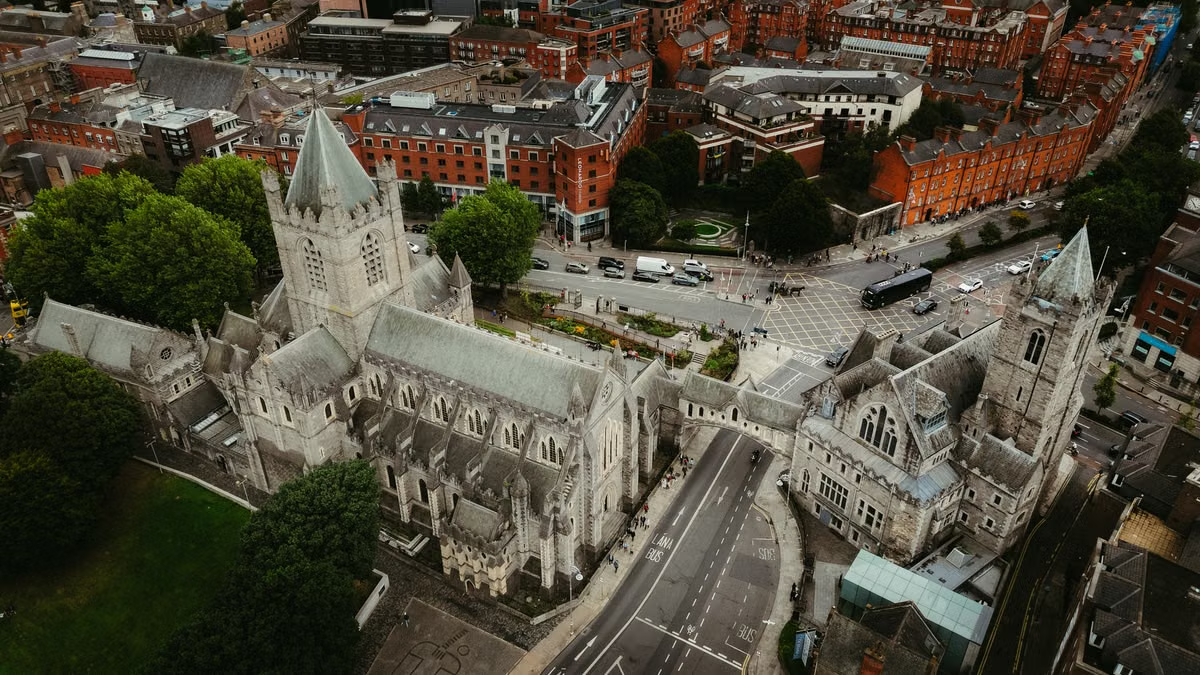
Country Context: Ireland
- Student Visa: Requires a Stamp 2 immigration permission for full-time programmes over 90 days, registered with the immigration authorities shortly after arrival.
- Post-Study Work Rights: The Third Level Graduate Programme gives bachelor’s graduates up to 12 months to remain and work full-time, and master’s or PhD graduates up to 24 months, to seek graduate-level employment.
- Primary Language: English. Irish (Gaelic) is co-official but not required for daily life, university study, or work, making Dublin one of the more linguistically accessible EU study destinations.
- Healthcare System: Ireland’s public healthcare system involves fees even for residents, and non-EU international students are generally required to hold private health insurance as a condition of their visa.
Key Takeaways
- The post-study work window scales with your degree level, up to 12 months for bachelor’s graduates and up to 24 months for master’s or PhD graduates.
- Housing is the single biggest planning challenge here, students who don’t secure accommodation early often struggle to find anything reasonable near campus.
- English as the primary language removes a real barrier that affects several other EU study destinations.
- Dublin’s tech and pharma cluster gives students genuine access to major multinational employers without leaving the city.
Education
Very Good
Strong, internationally recognised universities with genuine research output, though a smaller overall higher education system than some larger study destinations.
Cost of Living
Mixed
Cheaper than London for most day-to-day expenses, but still among the pricier EU capitals overall, driven substantially by housing costs.
Housing
Significant Challenges
One of the most acute student housing shortages of any city on this list, with rents that have risen sharply and genuine competition for anything close to campus.
Transportation
Good
The Luas tram, DART rail, and Dublin Bus network cover the city reasonably well, though it’s less extensive than transit in larger capitals and the city centre is very walkable regardless.
Safety
Very Good
Generally safe for students taking normal city precautions, with most university areas rated well for day-to-day safety.
Healthcare
Good
Solid healthcare overall, though the public system involves real fees and wait times, making private student insurance a useful safeguard, not just a visa formality.
Employment & Work Opportunities
Excellent
European headquarters for major tech and pharmaceutical companies are based directly in Dublin, giving students unusually direct access to multinational employers.
Student Lifestyle
Very Good
A social, pub-and-music culture in a compact city where most things worth doing are within walking distance of campus.
Climate
Mixed
Mild but famously changeable and wet for much of the year, with no real extremes of heat or cold to plan around.
Student Essentials
Monthly Budget
- Accommodation (shared/dorm)€850
- Food€320
- Transit Pass€110
- Phone & Internet€30
- Entertainment€170
- Total€1,480
Working While Studying
- Hours Allowed: Up to 20 hours per week during term for Stamp 2 holders, full-time during official college holiday periods.
- Common Jobs: Retail, hospitality, campus roles, and internships through university career services, particularly common in Dublin’s tech sector.
- Tax Notes: You’ll need a Personal Public Service (PPS) number before working legally, and income above the standard rate cut-off is taxed under normal Irish rules.
Scholarships
Application Routes Worth Knowing
- Government of Ireland Scholarships: State-funded awards for postgraduate research students, applied for through the Irish Research Council rather than directly through a university.
- University Entrance Scholarships: Both Trinity and UCD run their own merit-based awards for high-achieving international undergraduates, generally considered automatically alongside admission.
- Naughton Foundation Scholarships: A privately funded scheme supporting science and engineering postgraduate study at Irish universities, applied for separately from standard admission.
Visa Requirements

Trinity College Dublin
Ireland’s highest-ranked university, with non-EU undergraduate tuition running €21,570-€29,570 per year depending on course, set in a historic city-centre campus.
- Business
- Computer Science
- Medicine
- Law
University College Dublin (UCD)
Ireland’s largest university by enrolment, with a large, modern campus and particularly strong programmes in business, engineering, and agricultural sciences.
- Business
- Engineering
- Agriculture
- Veterinary Medicine
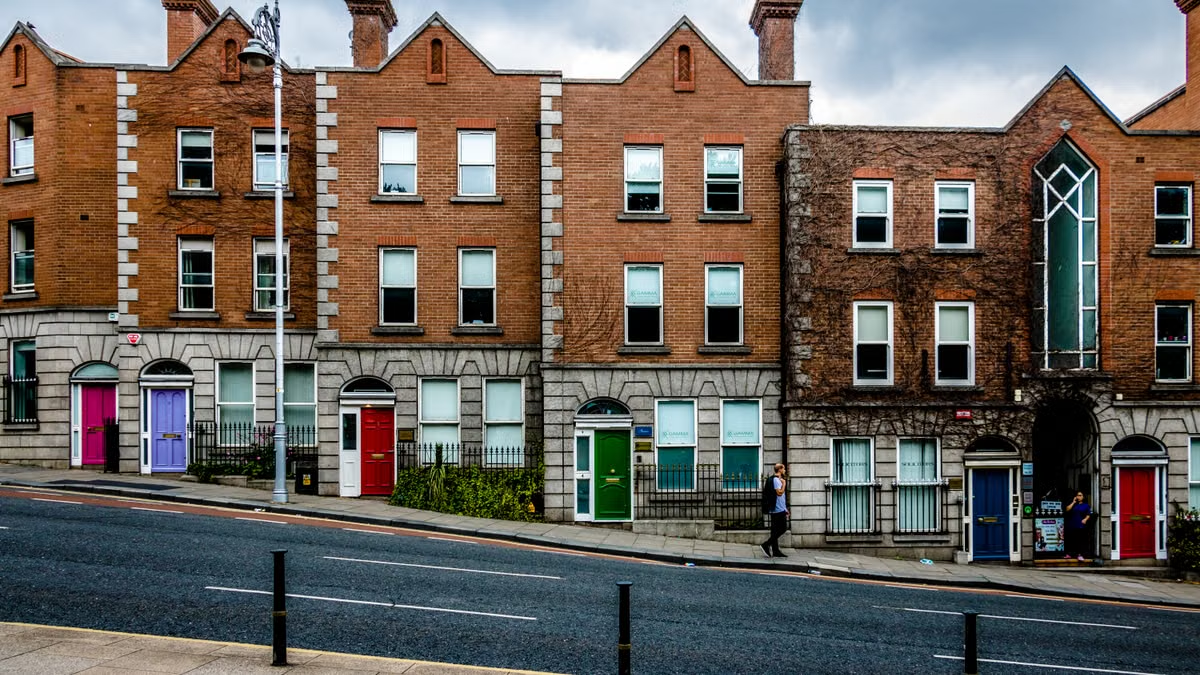
Neighbourhoods to Consider While Studying in Dublin
There’s no single right answer here, so we’ve picked four areas that each do one thing particularly well. Whichever priority matters most to you, cost, lifestyle, space, or commute time, one of these should fit.
Rathmines
Best for Budget-Conscious Students
A well-established student neighbourhood south of the city centre, with rent generally below areas closer to Trinity or UCD, and good bus links into town.
Dublin 2 / Portobello
Best for Shortest Commute
Walking distance to Trinity and the city centre, with a strong cafe and canal-side culture, at a rent premium given the location.
Drumcondra
Best for Social & Cultural Life
A lively, affordable student area with a strong pub culture and good transport links, popular with students at DCU as well as Trinity and UCD.
Stillorgan / UCD area
Best for Grad Students Wanting Space
The residential area surrounding UCD’s suburban campus, offering more space for the money than the city centre, at the cost of a longer commute into town.
How We Score This
Each category is rated on a five-point scale: Excellent, Very Good, Good, Mixed, or Significant Challenges. We use qualitative bands, and no decimal scores, because factors like student lifestyle or housing quality don’t reduce to a single comparable number from any one source. Ratings reflect research across publicly available information, and specific facts such as tuition figures and visa timelines are cited directly where they’re used.
Overall Student Experience Score
Good
A strong option for students prioritising an English-speaking EU base and direct access to major multinational employers, backed by a genuine post-study work pathway. The main trade-off to plan around is housing, which needs to be sorted well before arrival, not academics or safety.
Where to Go From Here
-

The Student’s Guide to Boston
Home to more world-ranked universities per square mile than almost anywhere else, and a genuine research and biotech pipeline to…
-

The Student’s Guide to Singapore
Some of Asia’s top-ranked universities, exceptional safety, and a global business hub. Here’s what studying in Singapore looks like, including…
-

The Student’s Guide to Hong Kong
World-ranked universities, one of the most generous post-study work visas in Asia, and a global finance hub. Here’s what studying…
-

How to Sort Your Finances Before You Study Abroad
Money problems abroad are usually planning problems in disguise. Here is how to set up your finances before you leave,…
-

University Halls vs Private Renting for Your First Year Abroad
For your first year in a new country, where you live shapes almost everything else. Here is an honest comparison…
-

How to Make Your First Weeks Abroad Go Smoothly
The first weeks in a new country set the tone for the whole experience. Here is how to spend them…