
City Guide · 12 min read
Research opportunitiesAffordable tuitionSafetyTech careersPublic transitImmersion in a new language
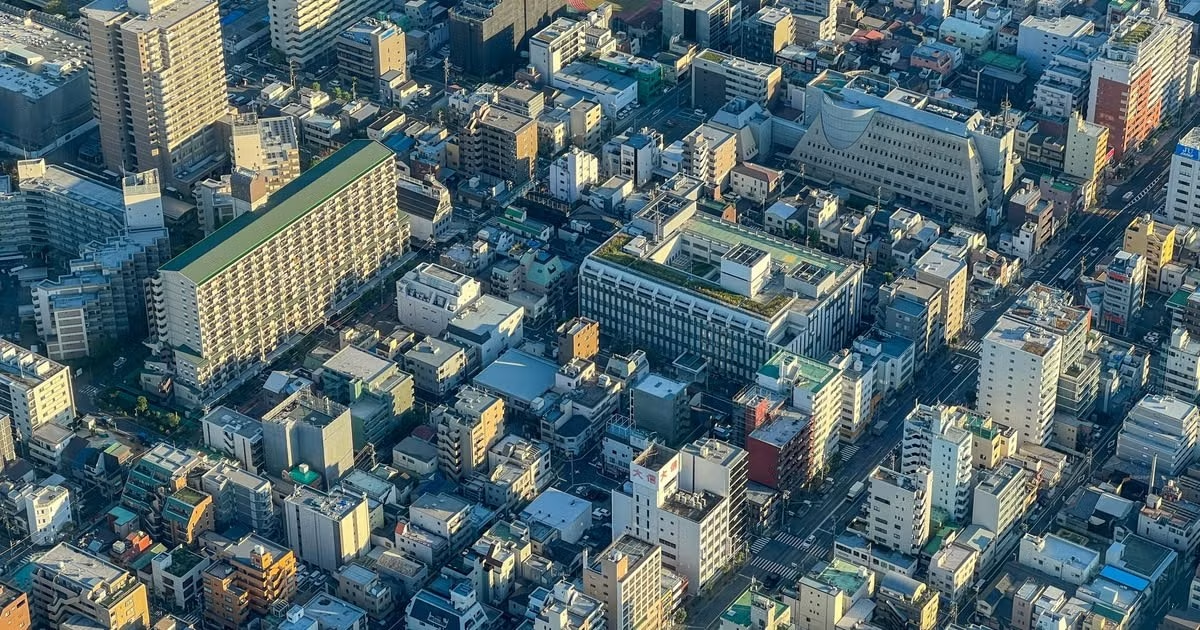
Tokyo is Japan’s capital and largest city, and consistently one of the most requested destinations for international students weighing a move to East Asia. It combines internationally ranked research universities, an unusually low cost for tuition relative to programme quality, and a public transit system widely regarded as among the best in the world. The trade-offs are real too: language, and a housing market with its own unfamiliar conventions for newcomers.

Country Context: Japan
- Student Visa: Requires a Certificate of Eligibility from your host institution before applying, adding lead time most applicants don’t expect on their first pass.
- Post-Study Work Rights: Graduates get a 6-month job-hunting period, renewable once, giving up to roughly a year to secure a job offer before a work visa transition is needed.
- Primary Language: Japanese. Most degree programmes (outside select English-taught tracks at major universities) are delivered in Japanese, and daily life assumes at least conversational ability.
- Healthcare System: Universal National Health Insurance, mandatory enrolment for residents including international students, covering the large majority of medical costs.
Key Takeaways
- National university tuition is set by national policy, well apart from individual school prestige, which is part of why cost and education quality don’t trade off here the way they do in many other countries.
- The post-study job-hunting visa gives roughly a year to secure work after graduation, longer than many students assume going in.
- Japanese language ability is the single biggest determinant of how smooth daily life and part-time work feel, more than any other factor on this page.
- Tokyo’s safety and transit quality are both exceptional, not just good by regional comparison.
Education
Excellent
Home to internationally ranked research universities and a national tuition policy that keeps quality and affordability from trading off against each other the way they do elsewhere.
Cost of Living
Good
More affordable than its global-city reputation suggests for groceries and transit, though central housing is the main pressure point for students on a tight budget.
Housing
Good
A large rental market with real options, but one with unfamiliar conventions (key money, guarantor requirements) that catch new international students off guard.
Transportation
Excellent
An extensive, highly punctual rail and subway network that reaches nearly every part of the city, widely regarded as one of the best urban transit systems anywhere.
Safety
Excellent
Very low rates of violent crime and a strong culture of public order, consistently rated among the safest major cities for students living independently.
Healthcare
Very Good
Universal coverage through National Health Insurance with broad access to care, though language can be a real barrier outside larger hospitals with international departments.
Employment & Work Opportunities
Good
Part-time work is available and common among students, but competitive full-time roles after graduation increasingly favour strong Japanese ability.
Student Lifestyle
Very Good
A large, active international student community alongside rich cultural life, though building close local friendships can take longer without language ability.
Climate
Good
Four distinct seasons with a hot, humid summer and a notable rainy season in June, milder and more comfortable in spring and autumn.
Student Essentials
Monthly Budget
- Accommodation (shared/dorm)¥70,000
- Food¥35,000
- Transit Pass¥10,000
- Phone & Internet¥6,000
- Entertainment¥15,000
- Total¥136,000
Working While Studying
- Hours Allowed: Up to 28 hours per week during term, extending to full days during official school breaks.
- Common Jobs: Tutoring (especially in English), campus positions, food service, and retail.
- Tax Notes: Income is taxable above a certain threshold. Confirm current tax treaty details with your university’s international office. Home-country rules seldom apply.
Scholarships
Application Routes Worth Knowing
- MEXT, Embassy Route: Apply through the Japanese embassy in your home country before arrival. This is the most common path for both undergraduate and graduate applicants, and covers tuition plus a living stipend.
- MEXT, University Route: Nominated directly by your host university after you’re already admitted or enrolled. A separate track from the embassy route, and no fallback for it. Some universities run this and some don’t.
- University-Specific Aid: Merit-based tuition reductions offered directly by schools like the University of Tokyo or Waseda, applied for separately from MEXT and worth checking even if you don’t qualify for it.
Visa Requirements
The University of Tokyo
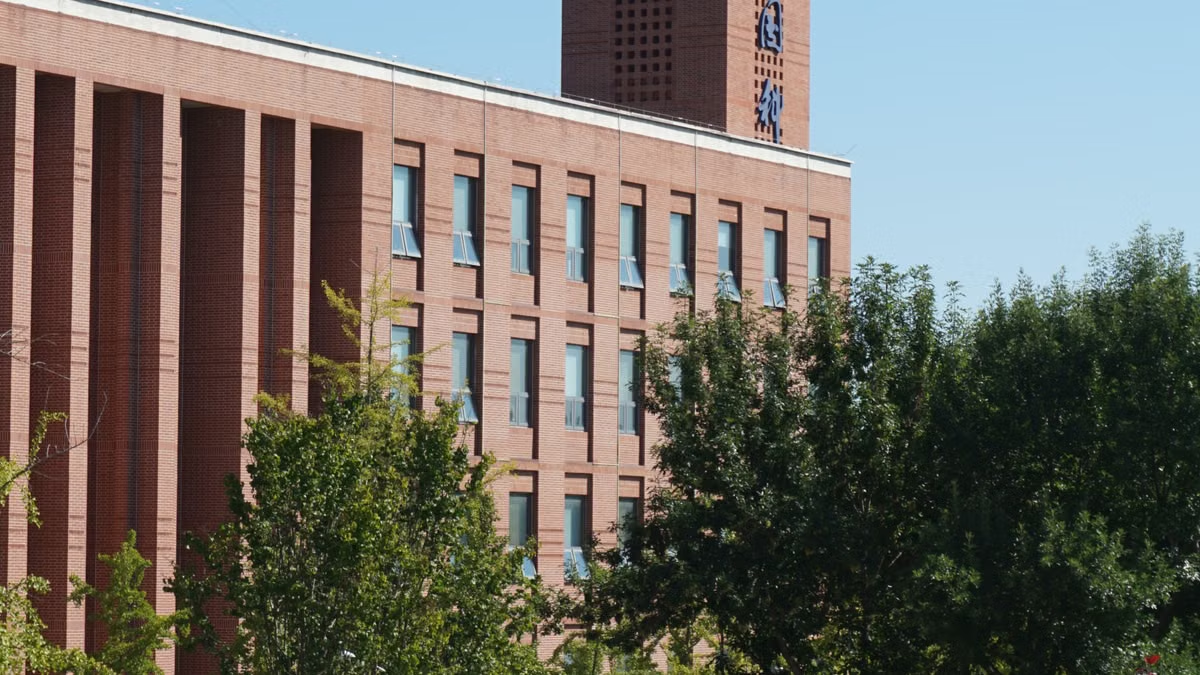
Japan’s most selective national university, with standardised national tuition (JPY 535,800/year for most undergraduate programmes) regardless of the school’s prestige. Strong across sciences, engineering, law, and economics, with a growing number of English-taught graduate programmes.
- Engineering
- Law
- Natural Sciences
- Economics
Waseda University
One of Japan’s most internationally recognised private universities, with one of the largest international student populations in the country and a wide range of English-taught degree options at both undergraduate and graduate level.
- International Studies
- Business
- Political Science
Keio University
A historically prestigious private university with strong industry and alumni networks, particularly valuable for students targeting corporate careers in Japan after graduation.
- Business
- Medicine
- Economics
Also in this pillar
Neighbourhoods to Consider While Studying in Tokyo
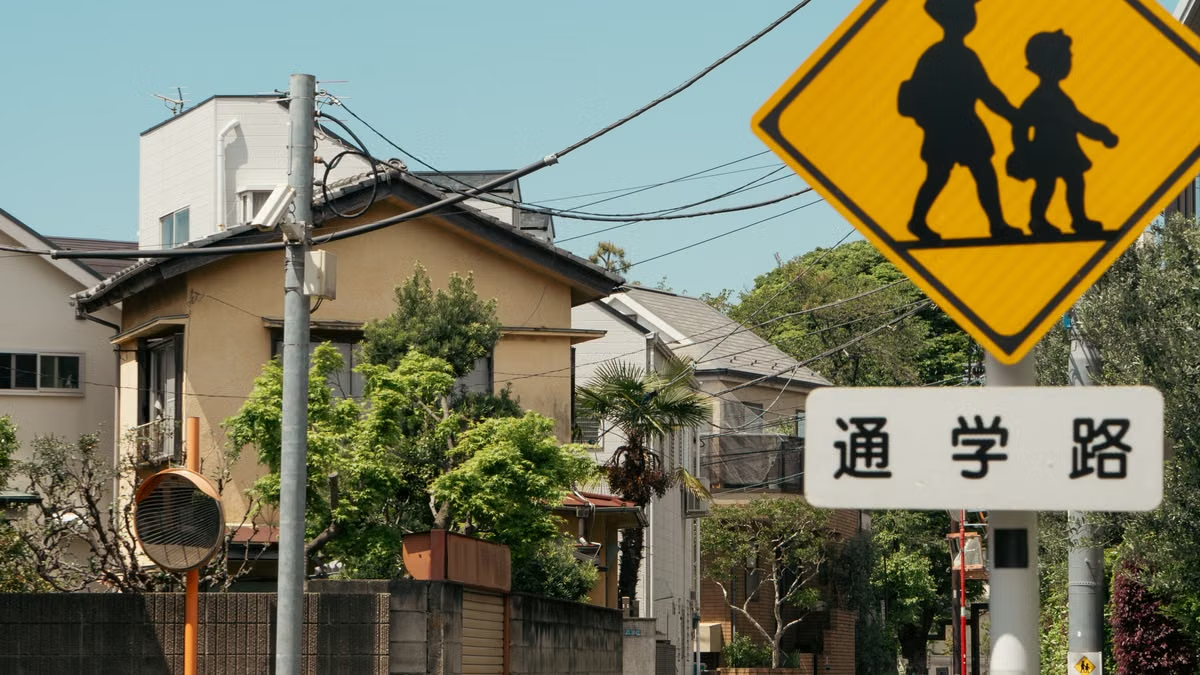
There’s no single right answer here, so we’ve picked four areas that each do one thing particularly well. Whichever priority matters most to you, cost, lifestyle, space, or commute time, one of these should fit.
Kawaguchi, Saitama
Best for Budget-Conscious Students
Just across the prefecture line north of central Tokyo, with a direct line into Tokyo and Ueno in roughly 20-25 minutes. Rent runs meaningfully below central wards for a comparable apartment, which is exactly why it’s a common choice among students watching their budget closely.
Kichijoji, Tokyo
Best for Social & Cultural Life
Still technically Tokyo, but a western neighbourhood consistently rated among the city’s most liveable: parks, a walkable shopping street, and a strong cafe and live-music scene. About 25-30 minutes to central Tokyo by direct train, at a rent noticeably below the central wards.
Nishi-Funabashi, Chiba
Best for Grad Students Wanting Space
A well-connected hub just over the Chiba border, roughly 25 minutes from central Tokyo with direct access on multiple lines. The same budget typically stretches to a noticeably larger apartment here, which matters more once you’re working from home on a thesis or research.
Nezu & Yanaka, Tokyo
Best for Shortest Commute
A quiet, low-rise old-Tokyo neighbourhood within walking or cycling distance of the University of Tokyo’s Hongo campus. Rent runs higher than the other options here, but it’s the clearest trade-off of cost for time if a short commute matters most to you.
How We Score This
Each category is rated on a five-point scale: Excellent, Very Good, Good, Mixed, or Significant Challenges. We use qualitative bands, and no decimal scores, because factors like student lifestyle or housing quality don’t reduce to a single comparable number from any one source. Ratings reflect research across publicly available information, and specific facts such as tuition figures and visa timelines are cited directly where they’re used.
Overall Student Experience Score
Very Good
A strong option for students who are willing to engage with the language, backed by excellent safety, transit, and education quality. The main trade-off to plan around is the language barrier, not cost or safety.
Where to Go From Here
-
The Student’s Guide to London
World-leading universities, a global city, and a cost of living that catches almost every international student off guard. Here’s what…
-
The Student’s Guide to Beijing
Two of the highest-ranked universities in Asia, remarkably affordable tuition, and a deep immersion in Mandarin. Here’s what studying in…
-

The Student’s Guide to Paris
Remarkably low public university fees, a genuine year to job-hunt after graduation, and one of the world’s great cities as…
-
The Student’s Guide to Philadelphia
An Ivy League education at the same price as everyone else, genuine history on every block, and real affordability next…
-

The Student’s Guide to Barcelona
Remarkably affordable tuition, a liveable Mediterranean city, and a full year to job-hunt after graduation. Here’s what studying in Barcelona…
-

How to Pack for a Year Abroad Without Overpacking
You are moving your life for a year, but you are not carrying your whole life in a suitcase. Here…