How Many Mentors Should I Actually Have?

One deep relationship builds trust fast. Several cover more ground. Here's how to think about the right number for you.


One deep relationship builds trust fast. Several cover more ground. Here's how to think about the right number for you.

Depth with one person, or breadth across several. Here's how the two approaches compare, and how to tell which one your situation calls for.

Arriving is the easy part. This is the guide to the months that follow, from the paperwork of the first fortnight to the point where a foreign city stops being somewhere you are staying and starts being where you live.

A well-matched mentor two years ahead of you often helps more than a poorly-matched one twenty years ahead. Here's how to choose one deliberately.
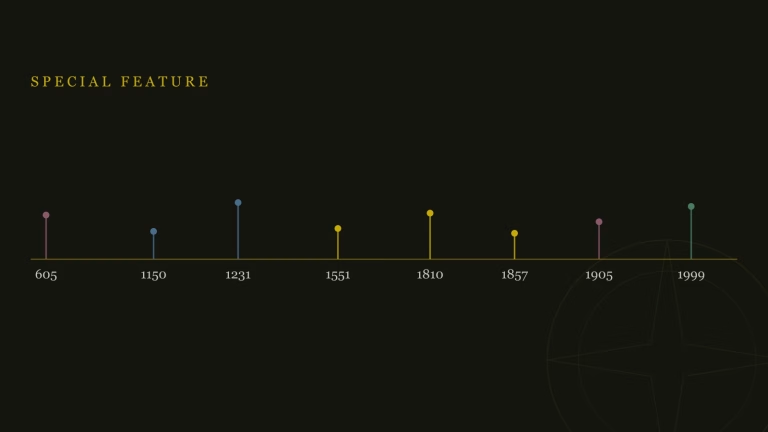
Academic credentials began as guild licences and became the world's most portable form of trust. Understanding what they were built to prove explains which ones are worth pursuing, and why the most prestigious qualification is often the one that travels least.

A strong programme and a strong local job market for that field are two separate things, confirming one doesn't confirm the other. Here's how to check both before you commit.

Long before there is a track record to point at, people have formed a view of what you are like to work with. Here is what that view is built from, and how much of it is within your control.

In fifteen years the people in your seminar will be spread across the field you are entering, and several will be in a position to open a door. Here is how that network forms while you are still in it.

Yes, and the people who do it arrive at university with an advantage that is difficult to catch up on. Here is what building one involves when you are still at school.

The word suggests business cards and forced conversation. What it describes is the set of people who know what you are good at, and it begins far earlier than most students realise.