
City Guide · 12 min read
Top-ranked universities in AsiaAffordable tuitionMandarin immersionPublic transitHistory and cultureResearch opportunities
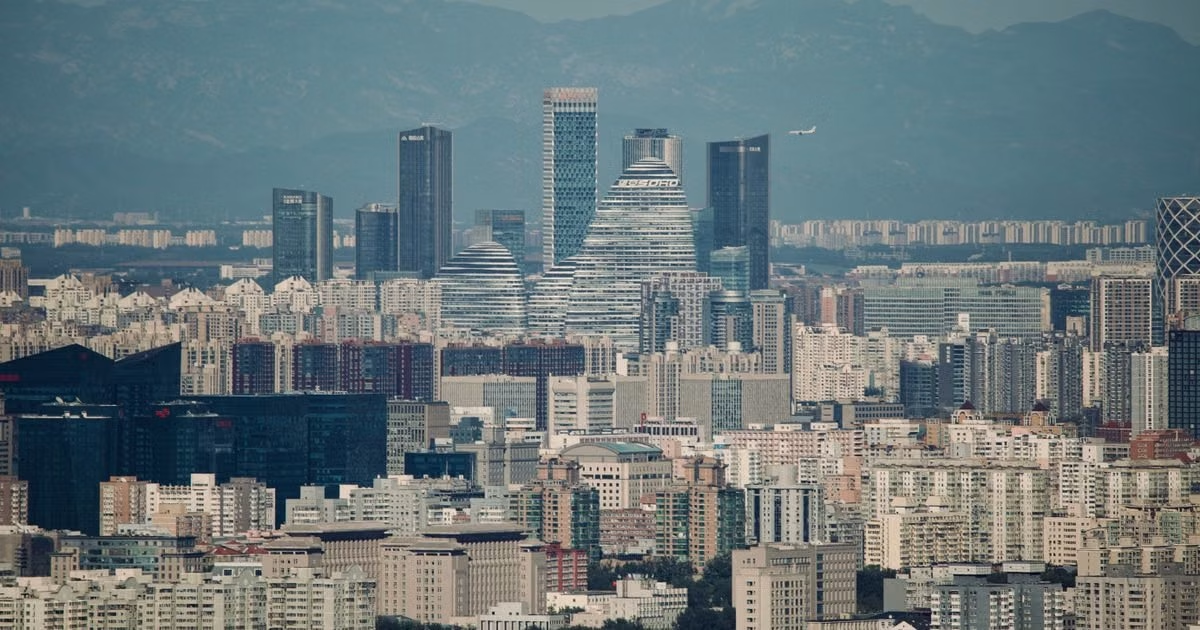
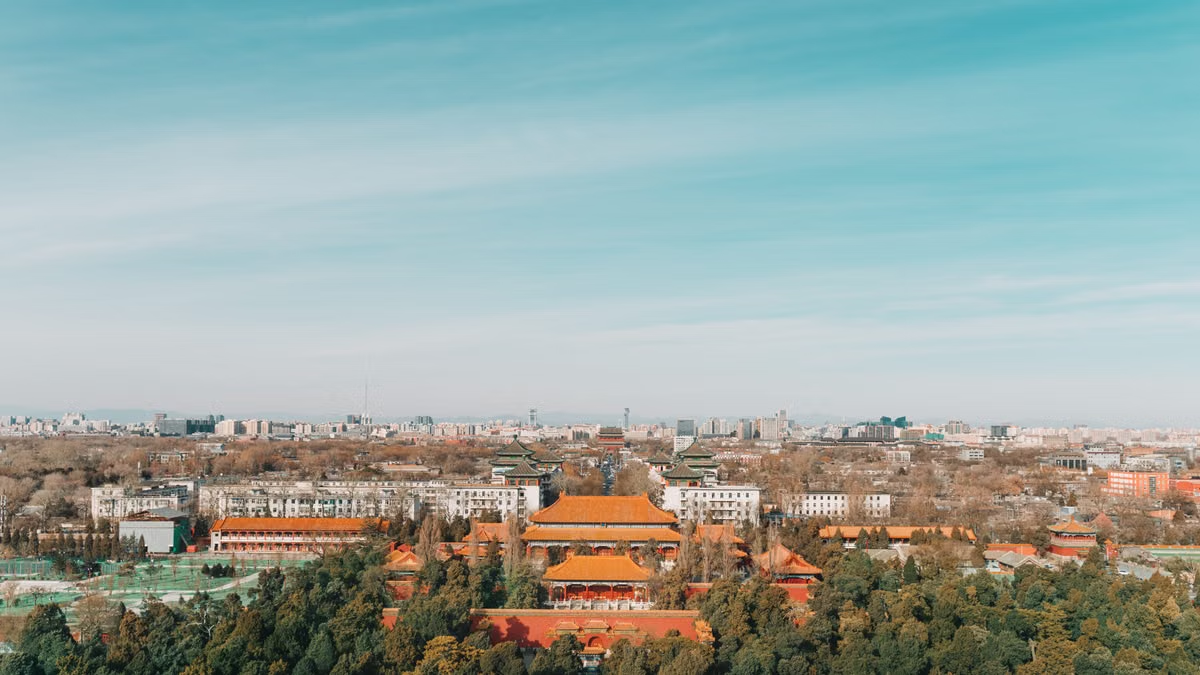
Beijing is China’s capital and the academic heart of the country, home to Peking University and Tsinghua University, two of the highest-ranked institutions in Asia. It combines internationally competitive research, tuition that runs a fraction of comparable Western programmes, and an extensive modern transit system layered directly over thousands of years of history. The trade-offs are real too: most degree programmes still require meaningful Mandarin ability, and the application and visa process has its own distinct rhythm compared to Western study destinations.
Country Context: China
- Student Visa: Requires an X1 visa (programmes over 180 days) issued after receiving an admission letter and JW202/JW201 form from your university, converted to a residence permit shortly after arrival.
- Post-Study Work Rights: China has no automatic post-study work visa. Graduates typically need a qualifying job offer to transition to a Z visa, though master’s-degree-or-above graduates from a Chinese university can now apply for a 1-year work visa within a year of graduating without prior work experience.
- Primary Language: Mandarin Chinese. Most degree programmes are taught in Mandarin, though a growing number of English-taught programmes exist at both flagship universities, particularly at graduate level.
- Healthcare System: International students are generally required to enrol in mandatory student health insurance arranged through the university, since China’s public healthcare system is seldom available directly.
Key Takeaways
- Tuition at Beijing’s top universities runs a genuine fraction of comparable programmes in the US, UK, or Australia.
- There’s no automatic post-study work visa, students need a qualifying job offer to transition to a Z visa after graduating.
- Most undergraduate programmes are taught in Mandarin, so realistic language ability, not just admission, determines how workable daily academic life is.
- Beijing’s transit and safety are both excellent, removing two of the biggest day-to-day concerns students weigh elsewhere.
Education
Excellent
Home to two of the highest-ranked universities in Asia, with strong national investment in research and increasingly competitive international rankings.
Cost of Living
Good
Meaningfully more affordable than most major Western study destinations for daily expenses, food, and transit, even as central housing costs have risen in recent years.
Housing
Good
University dormitories cover a large share of the international student population, with private rentals available nearby at a range of price points outside the city centre.
Transportation
Excellent
An extensive, low-cost subway and bus network reaches nearly every part of the city, widely regarded as one of the most efficient urban transit systems in Asia.
Safety
Excellent
Very low rates of violent crime and a strong culture of public order, consistently rated among the safest major cities for students living independently.
Healthcare
Good
Solid hospital access in major cities, though navigating the system in Mandarin can be a real hurdle without strong language ability or a translator.
Employment & Work Opportunities
Good
Real opportunities exist, particularly for students with strong Mandarin and a China-relevant field, though the lack of an automatic post-study visa makes long-term planning more employer-dependent.
Student Lifestyle
Very Good
A deep cultural immersion and a large, active international student community at both flagship universities, balanced against a real language and cultural adjustment curve.
Climate
Mixed
Four distinct seasons with a cold, dry winter and a hot, sometimes humid summer; spring and autumn are the most comfortable stretches of the year.
Student Essentials
Monthly Budget
- Accommodation (shared/dorm)¥2,200
- Food¥1,800
- Transit Pass¥150
- Phone & Internet¥100
- Entertainment¥600
- Total¥4,850
Working While Studying
- Hours Allowed: Generally restricted for Student Visa (X1/X2) holders; on-campus or approved internship work requires separate permission from your university and local authorities.
- Common Jobs: Approved on-campus roles, teaching or translation work tied to language ability, and internships arranged through university channels.
- Tax Notes: Any approved local income is subject to China’s individual income tax rules, and working without proper authorization risks your visa status, not just a fine.
Scholarships
Application Routes Worth Knowing
- Chinese Government Scholarship (CSC): A national scholarship covering tuition, accommodation, and a living stipend, applied for through your home country’s Chinese embassy or directly through a partner university.
- Beijing Municipal Government Scholarship: A separate, city-level award for students studying specifically at Beijing institutions, generally applied for through your university’s international office.
- University-Specific Scholarships: Both Peking University and Tsinghua run their own entrance scholarships for high-achieving international applicants, so check directly. CSC is rarely the only route.
Visa Requirements
Peking University
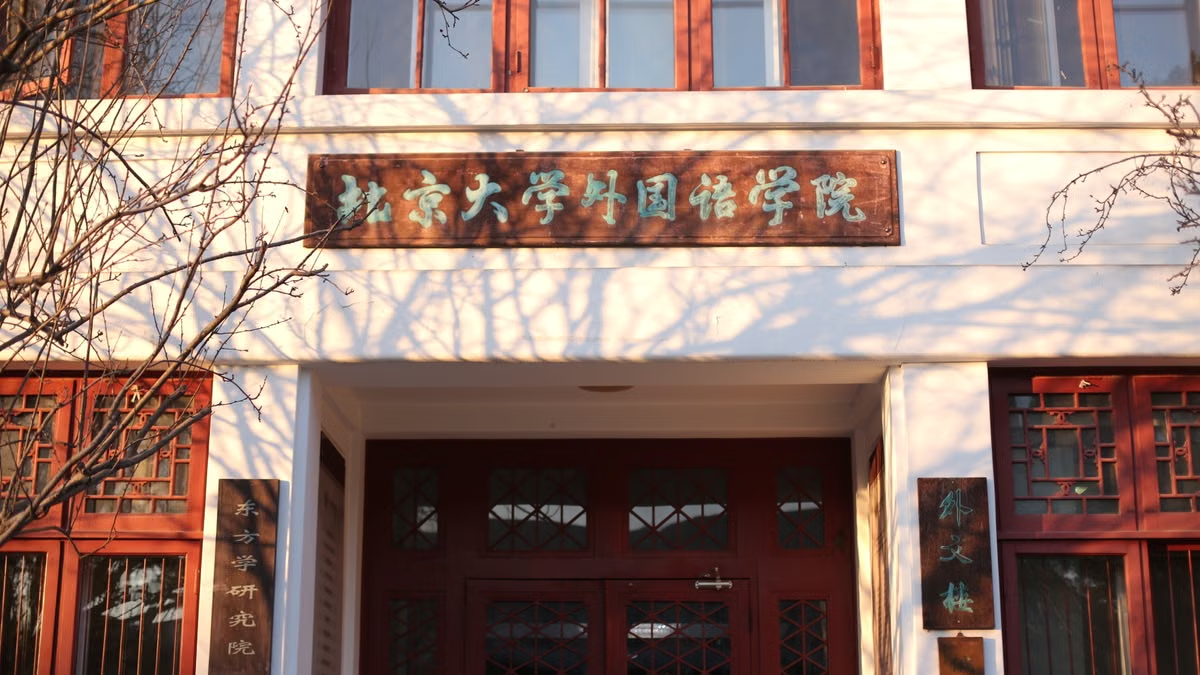
One of China’s most prestigious universities, with international undergraduate tuition running RMB 26,000-30,000 per year depending on field, humanities and social sciences at the lower end, science and engineering at the higher end.
- Sciences
- Humanities
- Economics
- Law
Tsinghua University
China’s top-ranked science and engineering institution, with tuition in a nearly identical range to Peking University and an increasingly strong reputation in applied technology fields.
- Engineering
- Computer Science
- Economics
- Management
Also in this pillar
Neighbourhoods to Consider While Studying in Beijing
There’s no single right answer here, so we’ve picked four areas that each do one thing particularly well. Whichever priority matters most to you, cost, lifestyle, space, or commute time, one of these should fit.
Wudaokou
Best for Shortest Commute
The area surrounding both Peking University and Tsinghua, with a dense concentration of student housing, cafes, and bookshops within walking distance of either campus.
Zhongguancun
Best for Grad Students Wanting Space
Beijing’s tech and innovation district just south of the main university area, with newer housing stock and strong subway access, popular with graduate students and researchers.
Gulou / Nanluoguxiang
Best for Social & Cultural Life
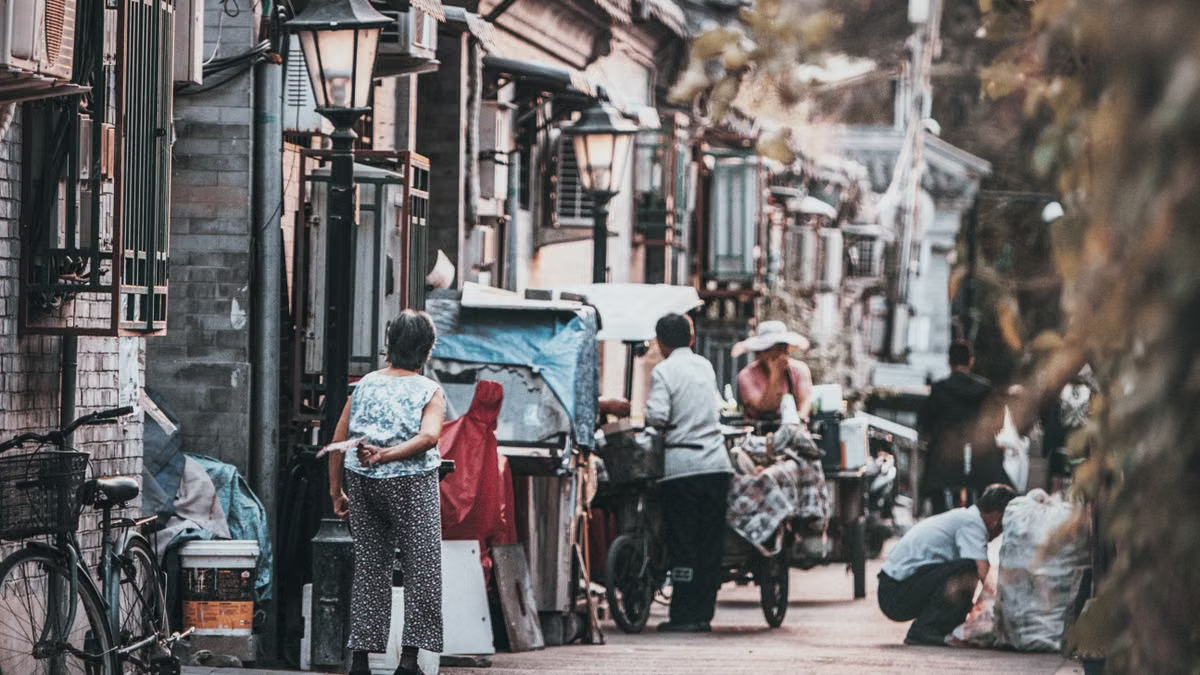
The historic hutong district near the Drum and Bell Towers, with a strong cafe, bar, and arts scene, though a longer commute to the main university district.
Wangjing
Best for Budget-Conscious Students
A large residential area popular with Beijing’s international community, with rent generally below the university district for a comparable unit and a direct subway line into the city centre.
How We Score This
Each category is rated on a five-point scale: Excellent, Very Good, Good, Mixed, or Significant Challenges. We use qualitative bands, and no decimal scores, because factors like student lifestyle or housing quality don’t reduce to a single comparable number from any one source. Ratings reflect research across publicly available information, and specific facts such as tuition figures and visa timelines are cited directly where they’re used.
Overall Student Experience Score
Very Good
A strong option for students willing to engage with Mandarin, backed by excellent safety, transit, and remarkably affordable tuition at two world-class universities. The main trade-off to plan around is the language commitment, not cost or academic quality.
Where to Go From Here
-
The Student’s Guide to London
World-leading universities, a global city, and a cost of living that catches almost every international student off guard. Here’s what…
-
The Student’s Guide to Hong Kong
World-ranked universities, one of the most generous post-study work visas in Asia, and a global finance hub. Here’s what studying…
-

The Complete Guide to Settling Into a City Abroad
Arriving is the easy part. This is the guide to the months that follow, from the paperwork of the first…
-
The Student’s Guide to Tokyo
Internationally ranked universities, unusually affordable tuition, and one of the best transit systems in the world. Here’s what studying in…
-

How to Sort Your Finances Before You Study Abroad
Money problems abroad are usually planning problems in disguise. Here is how to set up your finances before you leave,…
-
The Student’s Guide to Singapore
Some of Asia’s top-ranked universities, exceptional safety, and a global business hub. Here’s what studying in Singapore looks like, including…