

City Guide · 12 min read
World-ranked universitiesFinance and business careersPublic transitSafetyAccess to Mainland ChinaA bilingual environment
Hong Kong is a dense, highly developed global finance hub with three universities ranked among the best in Asia, and one of the most generous post-study work visas of any major study destination region. It combines a bilingual English/Cantonese environment, an exceptional public transit system, and direct proximity to Mainland China’s economy. The trade-offs are real too: some of the smallest, most expensive housing of any city students consider, and a pace of life that takes real adjustment.
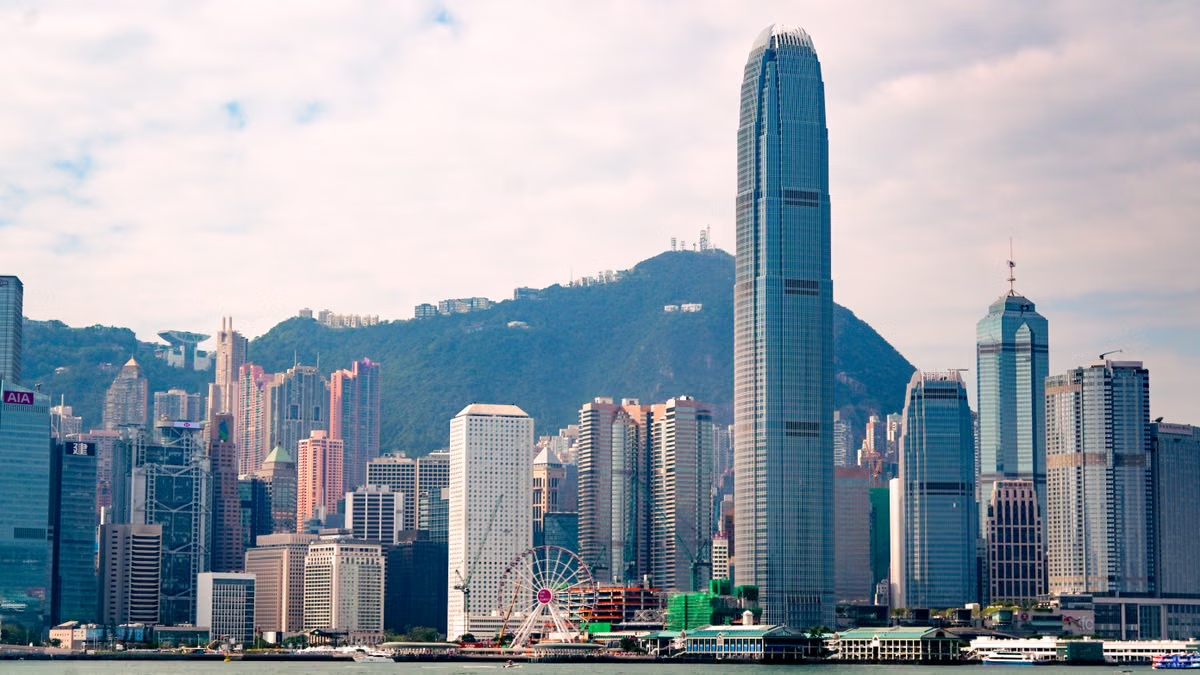
Country Context: Hong Kong
- Student Visa: Requires a student visa/entry permit sponsored by your host institution, applied for after confirmed admission, with processing that typically needs several weeks of lead time.
- Post-Study Work Rights: The IANG scheme grants an initial 24-month open work visa with no job offer required, one of the more generous post-study windows anywhere, extendable in further stages up to 36 months total.
- Primary Language: English and Cantonese are both official languages. Most degree programmes at major universities are taught in English, and daily life is workable in English, though Cantonese helps meaningfully outside university areas.
- Healthcare System: Hong Kong has strong public and private healthcare, but international students are generally not covered under local resident rates and are expected to hold private health insurance, often arranged through the university.
Key Takeaways
- IANG’s initial 24-month open work visa requiring no job offer is one of the most generous post-study arrangements of any major destination.
- Housing size and cost, not tuition, is what most students underestimate about Hong Kong specifically.
- English is sufficient for university life and most daily interactions, though it’s not the only language you’ll hear.
- Hong Kong’s position as a genuine gateway to Mainland China’s economy is a real, distinctive career advantage for students targeting Asia-Pacific finance or business.
Education
Excellent
Three universities ranked among the best in Asia in one compact city, with strong research funding and international faculty.
Cost of Living
Significant Challenges
Consistently ranked among the most expensive cities in the world for daily living, particularly housing, though public transit and food can be managed on a student budget.
Housing
Significant Challenges
Some of the smallest, most expensive student housing of any major study destination, with real competition for on-campus places and small private units elsewhere.
Transportation
Excellent
The MTR, buses, trams, and ferries together form one of the most efficient, affordable transit systems anywhere, reaching nearly every part of the city reliably.
Safety
Excellent
Very low rates of violent crime and a strong culture of public order, consistently rated among the safest major cities for students living independently.
Healthcare
Very Good
High-quality public and private healthcare overall, though international students need their own insurance since local resident rates don’t automatically apply to them.
Employment & Work Opportunities
Excellent
A genuine global finance and trade hub with strong campus recruiting, plus one of the most generous post-study work visas of any major destination to use it.
Student Lifestyle
Very Good
A dense, fast-paced student culture with easy access to Mainland China and the rest of Asia for travel, though the compact scale takes real adjustment for some students.
Climate
Mixed
Hot, humid summers with a real typhoon season, and a mild, comfortable winter, a very different seasonal rhythm from most Western study destinations.
Student Essentials
Monthly Budget
- Accommodation (shared/dorm)HK$ 8,000
- FoodHK$ 4,000
- Transit PassHK$ 600
- Phone & InternetHK$ 250
- EntertainmentHK$ 1,500
- TotalHK$ 14,350
Working While Studying
- Hours Allowed: Up to 20 hours per week during term for eligible full-time students, full-time during official vacation periods.
- Common Jobs: Campus roles, tutoring, and internships arranged through university career offices, particularly common in finance-adjacent fields.
- Tax Notes: Hong Kong’s salaries tax is comparatively low, and any local income still needs to be declared to the Inland Revenue Department regardless of the amount.
Scholarships
Application Routes Worth Knowing
- Hong Kong PhD Fellowship Scheme: A government-funded award covering a full stipend and tuition for doctoral candidates, applied for through your host university, and never directly with the government.
- University Entrance Scholarships: All three major universities run their own merit-based awards for incoming international undergraduates, generally considered automatically as part of admission review.
- Belt and Road Scholarship: Available to students from eligible partner countries and regions, a separate route worth checking eligibility for directly with your target university.
Visa Requirements

The University of Hong Kong (HKU)
Consistently ranked among the best universities in Asia, with non-local undergraduate tuition running HK$182,000 per year for 2025-26, and a international student body.
- Business
- Medicine
- Law
- Engineering
Hong Kong University of Science and Technology (HKUST)
A younger, research-intensive university known especially for engineering, business, and science, with strong direct links to Hong Kong’s finance and tech sectors.
- Engineering
- Computer Science
- Business
- Science
Chinese University of Hong Kong (CUHK)
A large, campus-style university known for a bilingual academic culture and a particularly strong reputation in medicine, business, and social sciences.
- Medicine
- Business
- Social Sciences
- Translation
Also in this pillar
Neighbourhoods to Consider While Studying in Hong Kong
There’s no single right answer here, so we’ve picked four areas that each do one thing particularly well. Whichever priority matters most to you, cost, lifestyle, space, or commute time, one of these should fit.
Sai Ying Pun
Best for Shortest Commute
Just west of HKU’s main campus, walkable to lectures with easy MTR access to the rest of the island. Convenient, but one of the more competitively priced areas nearby.
Sha Tin
Best for Grad Students Wanting Space
Home to CUHK’s large, green campus in the New Territories, with noticeably more space for the money than anywhere on Hong Kong Island, at the cost of a longer commute into the centre.
Mong Kok / Kowloon
Best for Budget-Conscious Students
Dense, affordable, and extremely well connected by MTR, with rent running below Hong Kong Island for a comparable unit, in one of the city’s busiest and most characterful districts.
Causeway Bay
Best for Social & Cultural Life
A lively shopping and nightlife district with a strong student presence, close to several university satellite campuses and well connected to the rest of the island.
How We Score This
Each category is rated on a five-point scale: Excellent, Very Good, Good, Mixed, or Significant Challenges. We use qualitative bands, and no decimal scores, because factors like student lifestyle or housing quality don’t reduce to a single comparable number from any one source. Ratings reflect research across publicly available information, and specific facts such as tuition figures and visa timelines are cited directly where they’re used.
Overall Student Experience Score
Very Good
A strong option for students prioritising career access to Asia-Pacific finance and business, backed by excellent transit, safety, and one of the most generous post-study work visas available. The main trade-off to plan around is housing, not academics or safety.
Where to Go From Here
-
The Student’s Guide to Tokyo
Internationally ranked universities, unusually affordable tuition, and one of the best transit systems in the world. Here’s what studying in…
-

Health Cover for International Students: What You Actually Need
Health cover is often a visa condition, not an optional extra, and getting it wrong can delay your arrival. Here…
-

How to Pack for a Year Abroad Without Overpacking
You are moving your life for a year, but you are not carrying your whole life in a suitcase. Here…
-
The Student’s Guide to Singapore
Some of Asia’s top-ranked universities, exceptional safety, and a global business hub. Here’s what studying in Singapore looks like, including…
-

How to Sort Your Finances Before You Study Abroad
Money problems abroad are usually planning problems in disguise. Here is how to set up your finances before you leave,…
-

The Student’s Guide to Beijing
Two of the highest-ranked universities in Asia, remarkably affordable tuition, and a deep immersion in Mandarin. Here’s what studying in…