
City Guide · 12 min read
Top-ranked universities in AsiaSafetyPublic transitFinance and tech careersA global student bodyAccess to Southeast Asia
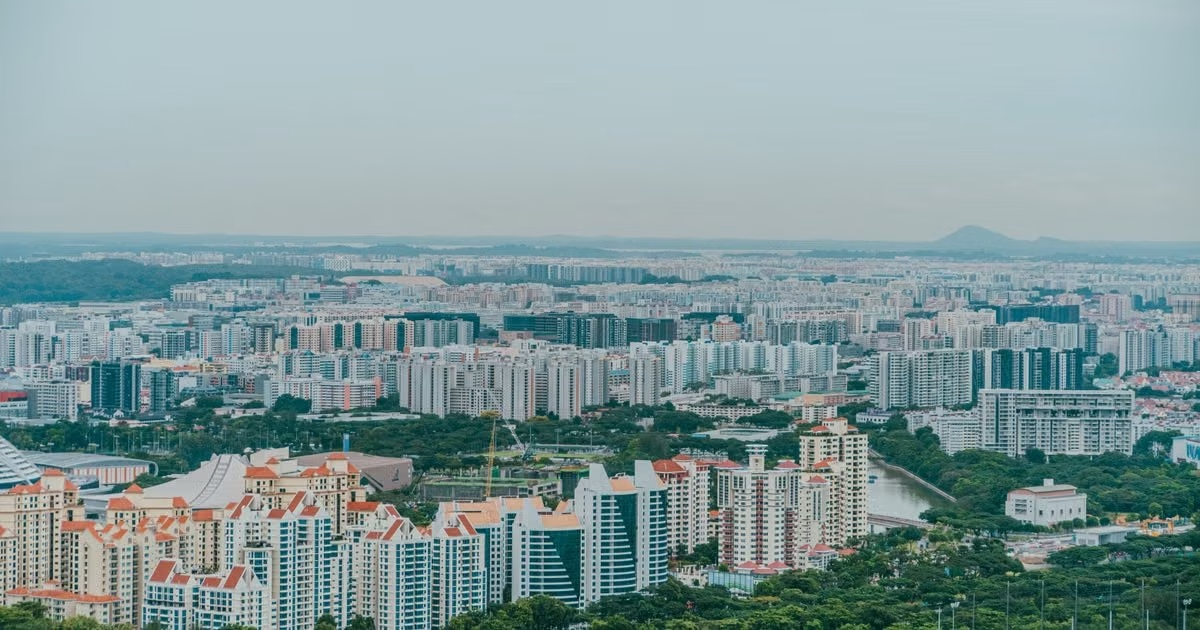
Singapore is a compact, highly developed city-state that has become one of the most requested destinations in Asia for international students, home to two of the region’s highest-ranked universities and a global business and finance hub. It combines excellent safety, a world-class transit system, and comparatively affordable tuition against a backdrop of exceptionally high living costs. The trade-offs are real too: a demanding academic culture, and unlike several other major study destinations, no automatic path to stay and work after graduation.
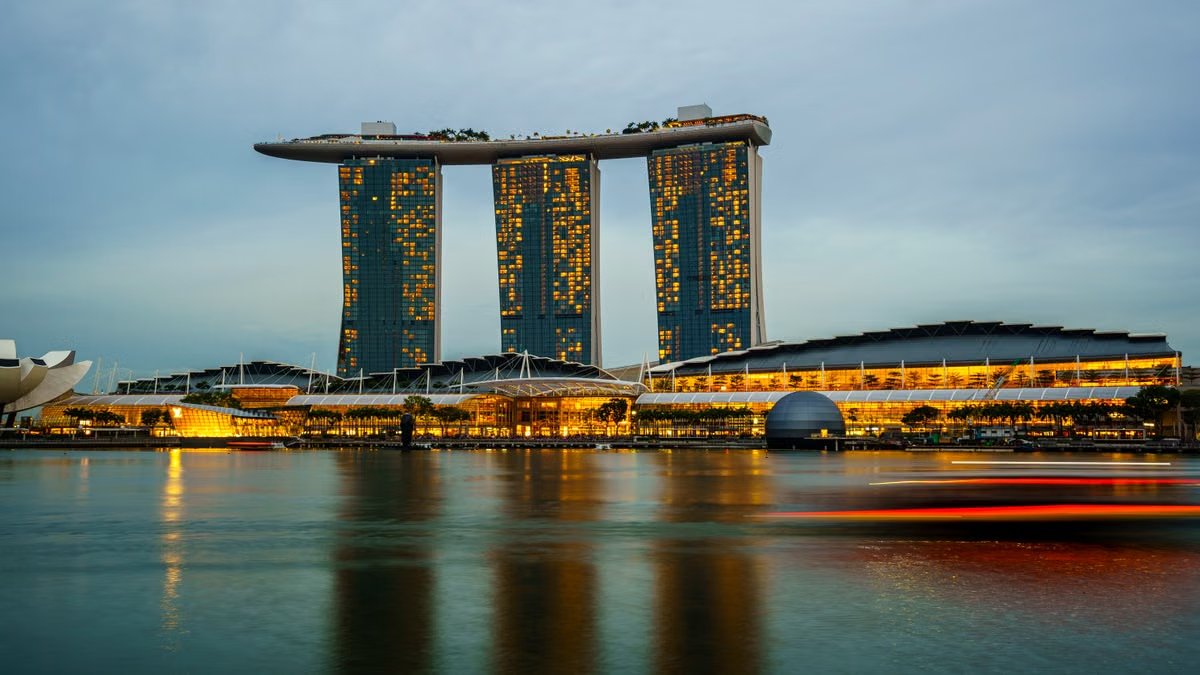
Country Context: Singapore
- Student Visa: Requires a Student’s Pass issued by ICA after admission, with an in-person formalities appointment shortly after arrival to complete the process.
- Post-Study Work Rights: Unlike Canada, the UK, or Australia, Singapore has no automatic post-study work visa. A Student’s Pass becomes invalid on graduation, with a short grace period, commonly around 30 days, to leave or transition to an employer-sponsored Employment Pass or S Pass.
- Primary Language: English is the language of instruction and business, alongside Mandarin, Malay, and Tamil as official languages. Daily life and university life both run comfortably in English alone.
- Healthcare System: International students are generally not covered by Singapore’s public healthcare schemes and are required to hold mandatory student health insurance, usually arranged directly through the university.
Key Takeaways
- There’s no automatic post-study work visa here, students need an employer willing to sponsor an Employment Pass or S Pass before their Student’s Pass expires.
- Tuition at the two flagship universities is competitive with, or cheaper than, comparable programmes in the US, UK, or Australia.
- Cost of living, particularly housing, is a much bigger factor in the total cost of studying here than tuition itself.
- Singapore’s safety and transit quality are both exceptional, consistently among the best of any city students consider.
Education
Excellent
Home to two of Asia’s highest-ranked universities, with strong government investment in research and a international faculty and student body.
Cost of Living
Significant Challenges
Consistently rated among the most expensive cities in the world for daily expenses, even though tuition itself is comparatively reasonable.
Housing
Significant Challenges
A tight rental market with high demand for student accommodation and limited on-campus housing relative to enrolment, particularly for upperclassmen.
Transportation
Excellent
The MRT and bus network is clean, extensive, and highly reliable, widely regarded as one of the best urban transit systems in Asia.
Safety
Excellent
Consistently rated among the safest countries in the world, with very low crime rates and a strong culture of public order.
Healthcare
Excellent
A world-class healthcare system overall, though international students need their own coverage since public schemes don’t automatically extend to them.
Employment & Work Opportunities
Good
A genuine finance, tech, and logistics hub with strong internship access during study, though the lack of an automatic post-study visa makes long-term hiring more dependent on employer sponsorship.
Student Lifestyle
Very Good
A international student community and easy regional travel across Southeast Asia, though the academic culture is demanding and competitive by design.
Climate
Good
Consistently warm and humid year-round with no distinct seasons, and regular rainfall rather than any real winter to plan around.
Student Essentials
Monthly Budget
- Accommodation (shared/dorm)SGD 1,100
- FoodSGD 500
- Transit PassSGD 120
- Phone & InternetSGD 40
- EntertainmentSGD 200
- TotalSGD 1,960
Working While Studying
- Hours Allowed: Up to 16 hours per week during term for eligible full-time students at approved institutions, full-time during vacations.
- Common Jobs: On-campus roles, tutoring, and internships arranged through university career offices, which oversee most student work arrangements.
- Tax Notes: Singapore has no capital gains tax and a relatively low income tax rate, but any local earnings still need to be declared according to Inland Revenue Authority rules.
Scholarships
Application Routes Worth Knowing
- Tuition Grant Scheme: A government subsidy that substantially reduces tuition for international students, in exchange for a work bond requiring employment in a Singapore-registered company for a set period after graduation.
- ASEAN Undergraduate Scholarship: Covers tuition, accommodation, and a living allowance for students from ASEAN member countries, applied for directly through the university alongside admission.
- University Merit Scholarships: Both flagship universities run their own competitive entrance scholarships for high-achieving international students, generally requiring a separate application from standard admission.
Visa Requirements
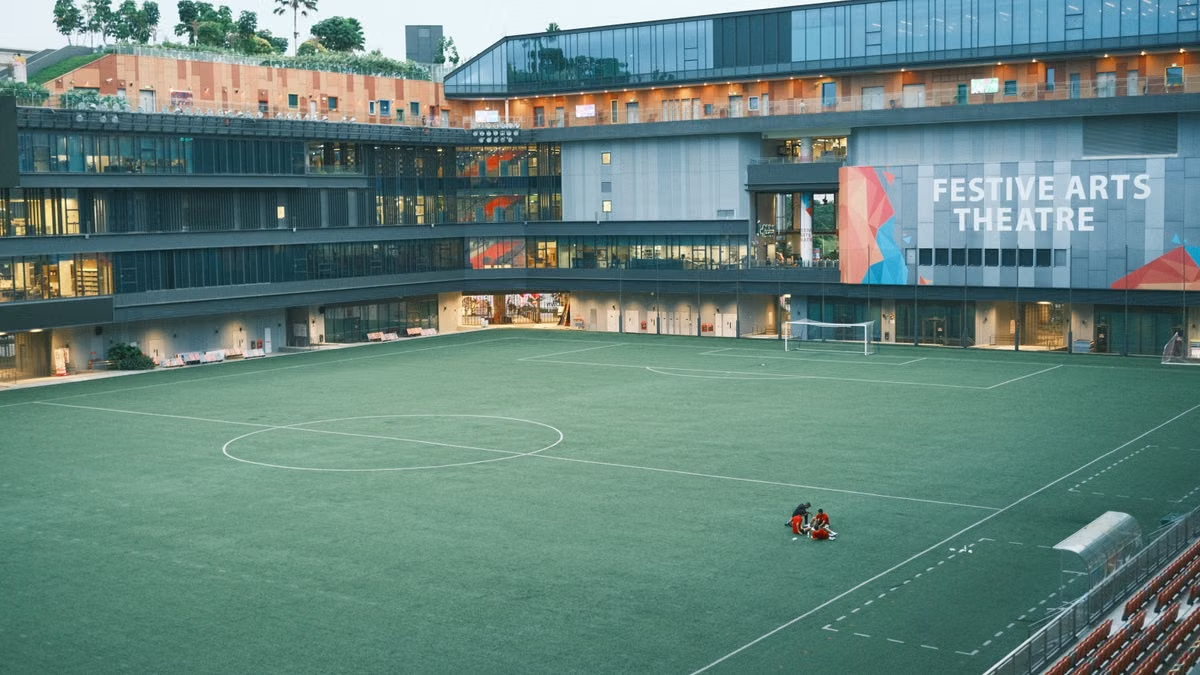
National University of Singapore (NUS)
Consistently ranked among the top universities in Asia and the world, with international undergraduate tuition under the Tuition Grant Scheme running roughly SGD 20,000-22,100 per year depending on programme.
- Engineering
- Business
- Computing
- Medicine
Nanyang Technological University (NTU)
A global leader in engineering and applied sciences with a large, modern campus and strong industry partnerships across Singapore’s tech and manufacturing sectors.
- Engineering
- Computer Science
- Materials Science
- Business
Singapore Management University (SMU)
A smaller, seminar-style business and social sciences university located in the city centre, known for close industry links and a more discussion-driven teaching style than the two larger universities.
- Business
- Economics
- Law
- Information Systems
Also in this pillar
Neighbourhoods to Consider While Studying in Singapore
There’s no single right answer here, so we’ve picked four areas that each do one thing particularly well. Whichever priority matters most to you, cost, lifestyle, space, or commute time, one of these should fit.
Kent Ridge / Clementi
Best for Shortest Commute
The area surrounding NUS, with a mix of student housing and HDB flats within walking or short-bus distance of campus. Convenient, but among the more sought-after rental areas nearby.
Jurong
Best for Budget-Conscious Students
West Singapore near NTU, with rent noticeably below the city centre and a growing amount of local amenities, connected to the rest of the city by MRT.
Tiong Bahru
Best for Social & Cultural Life
A characterful older neighbourhood known for cafes, art deco architecture, and a strong local food scene, popular with graduate students who want more city life outside of campus.
Bishan
Best for Grad Students Wanting Space
A central, family-oriented residential area with larger flats for the money and easy MRT access to both major universities and the city centre.
How We Score This
Each category is rated on a five-point scale: Excellent, Very Good, Good, Mixed, or Significant Challenges. We use qualitative bands, and no decimal scores, because factors like student lifestyle or housing quality don’t reduce to a single comparable number from any one source. Ratings reflect research across publicly available information, and specific facts such as tuition figures and visa timelines are cited directly where they’re used.
Overall Student Experience Score
Very Good
A strong option for students prioritising academic quality, safety, and access to Asia’s business hubs, backed by exceptional transit and healthcare. The main trade-offs to plan around are cost of living and the lack of an automatic post-study visa, not academics or safety.
Where to Go From Here
-

The Complete Guide to Settling Into a City Abroad
Arriving is the easy part. This is the guide to the months that follow, from the paperwork of the first…
-

The Complete Pre-Departure Guide for International Students
Moving your life to another country to study is a large task made of small, manageable ones. This is the…
-
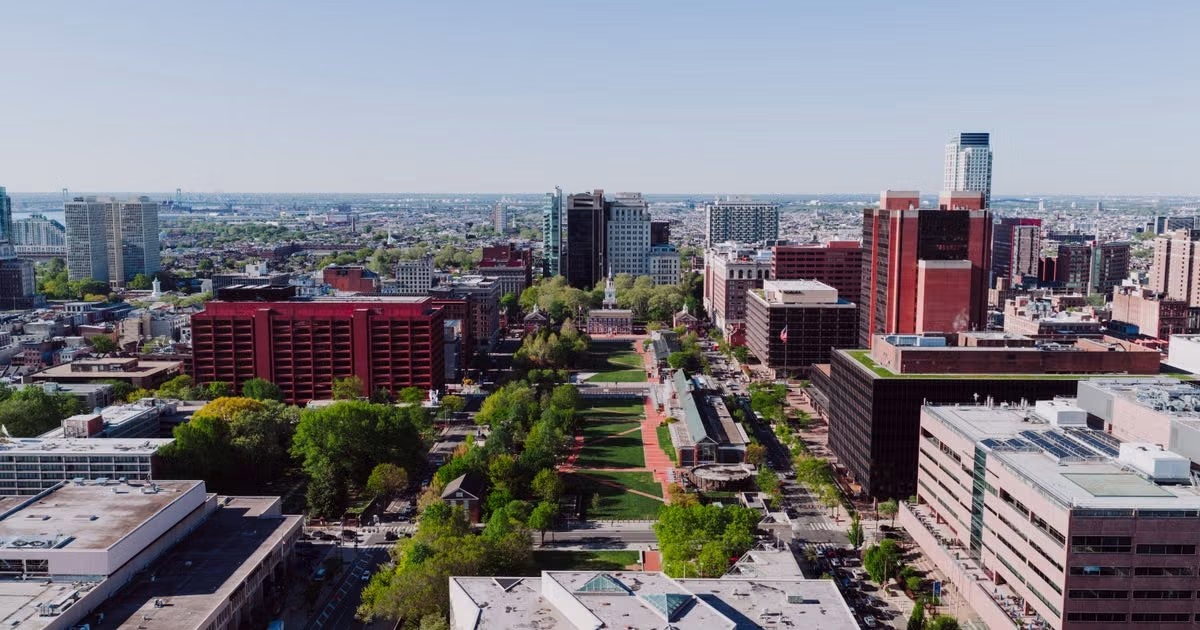
The Student’s Guide to Philadelphia
An Ivy League education at the same price as everyone else, genuine history on every block, and real affordability next…
-
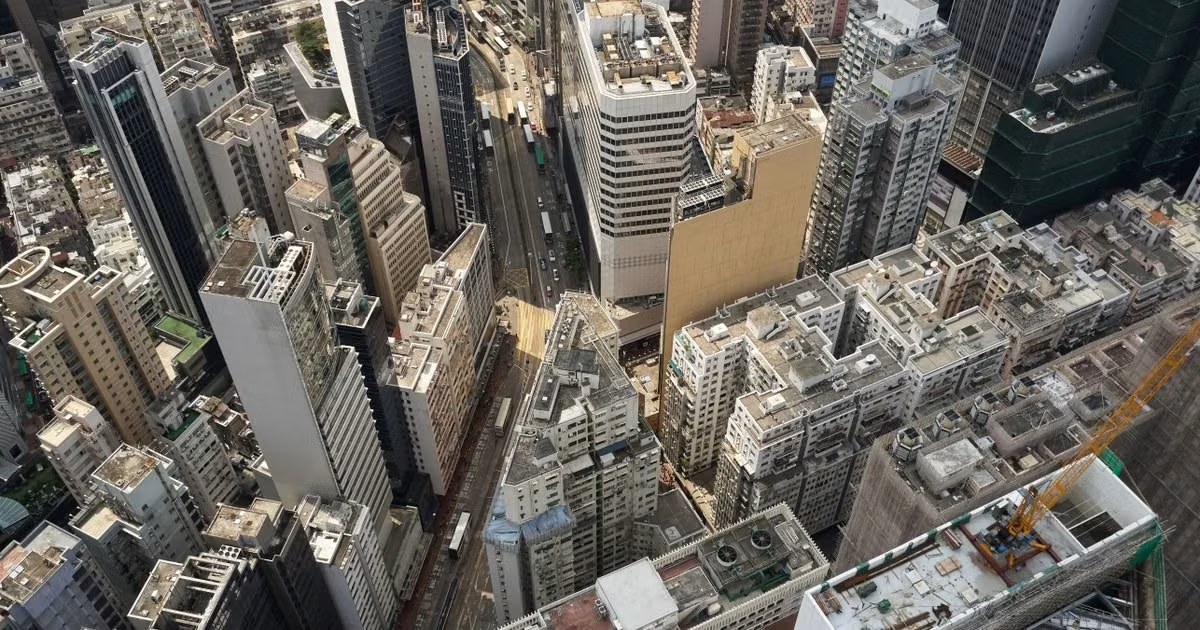
The Student’s Guide to Hong Kong
World-ranked universities, one of the most generous post-study work visas in Asia, and a global finance hub. Here’s what studying…
-
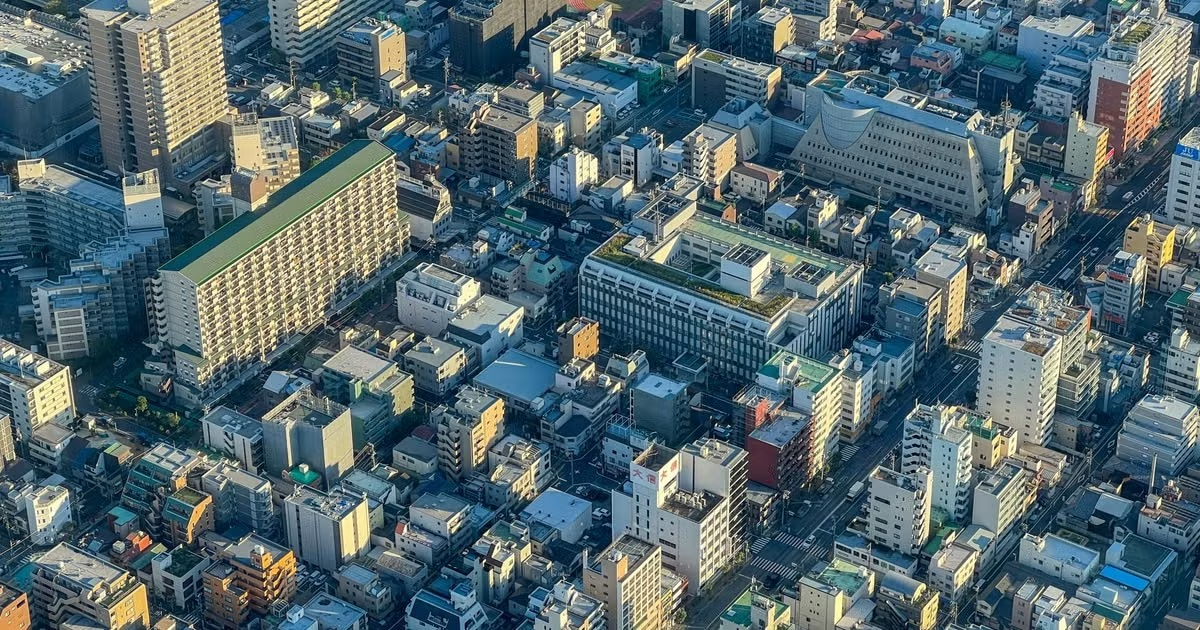
The Student’s Guide to Tokyo
Internationally ranked universities, unusually affordable tuition, and one of the best transit systems in the world. Here’s what studying in…
-
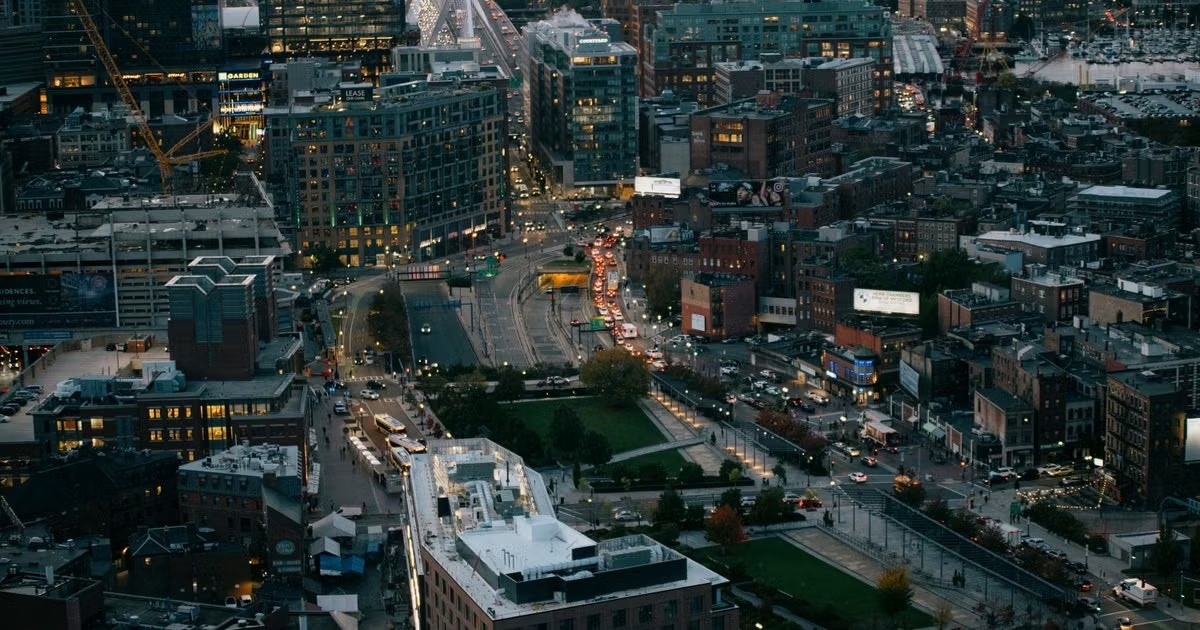
The Student’s Guide to Boston
Home to more world-ranked universities per square mile than almost anywhere else, and a genuine research and biotech pipeline to…