

City Guide · 12 min read
World-ranked universitiesResearch opportunitiesBiotech and healthcare careersSafetyPublic transitA dense academic community
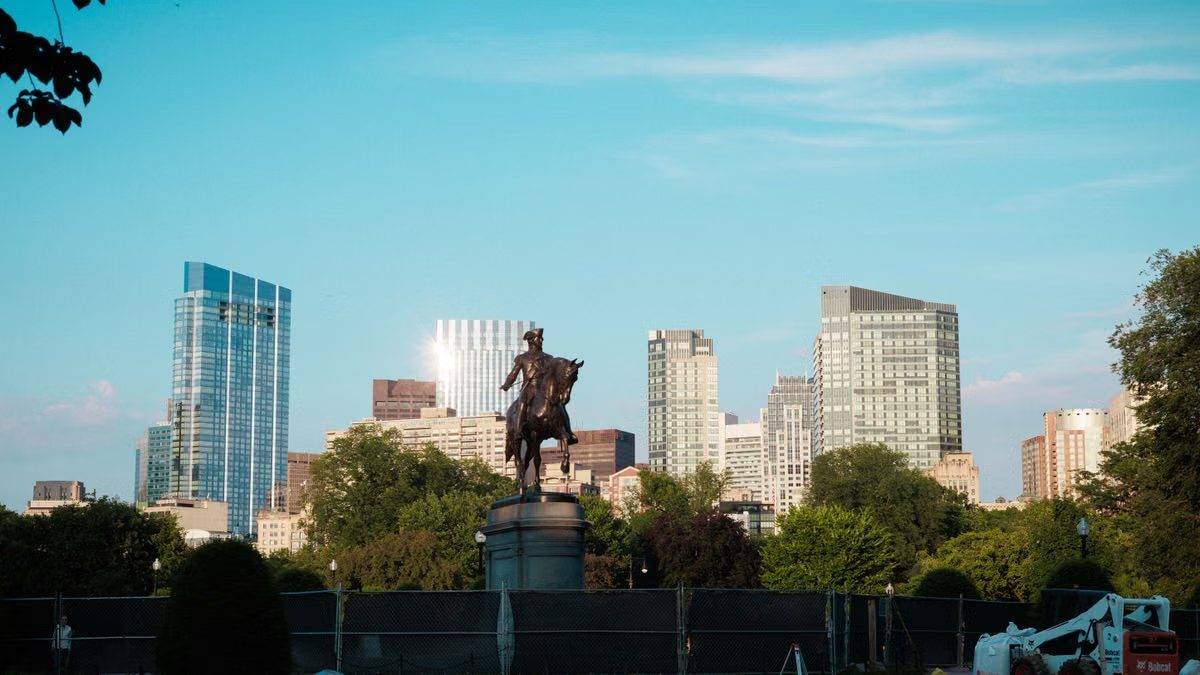
Boston, Massachusetts packs an unusual concentration of world-ranked universities, including Harvard and MIT, into a compact, walkable city, alongside one of the world’s leading biotech and healthcare research clusters. It has long been one of the most requested destinations for students seeking research opportunities and a academic culture that extends well beyond any single campus. The trade-offs are real too: a serious cost of living, and a rental market nearly as competitive as the admissions process itself.
Country Context: United States
- Student Visa: Requires an I-20 from a SEVP-certified school and an F-1 visa, plus the SEVIS fee paid separately before the visa interview, a step first-time applicants often miss.
- Post-Study Work Rights: Optional Practical Training (OPT) gives 12 months of post-completion work authorization, extended to up to 36 months total for graduates in qualifying STEM fields.
- Primary Language: English. Instruction, coursework, and daily life all happen in English, with no separate language requirement beyond standard admissions proficiency tests.
- Healthcare System: No universal public healthcare. Nearly all universities require international students to enrol in a student health insurance plan directly through the school unless they can show equivalent private coverage.
Key Takeaways
- STEM graduates can access up to 3 years of work authorization through OPT and its STEM extension, one of the more generous post-study windows for that specific group of fields.
- Health insurance is a real, separate budget line here, not an assumed public benefit, and most universities require their own plan by default.
- Boston’s student housing market is competitive, students who start searching in late summer for a September lease are often already behind.
- The sheer density of universities in one compact city means cross-registration, joint events, and shared research resources are more available here than almost anywhere else.
Education
Excellent
An unusual concentration of world-ranked research universities in one compact city, with real cross-institution access that’s rare to find anywhere else.
Cost of Living
Significant Challenges
Consistently one of the more expensive U.S. cities for rent, food, and daily expenses, though still generally below New York or San Francisco.
Housing
Significant Challenges
A tight rental market driven by the sheer number of students competing for a limited supply, particularly in neighbourhoods close to major campuses.
Transportation
Good
The MBTA (“the T”) subway and bus network covers the city reasonably well and is walkable alongside it, though the system is older and less reliable than some peer cities’ transit.
Safety
Very Good
Generally safe by major U.S. city standards, with most student neighbourhoods rated well for day-to-day safety, though normal city awareness still applies.
Healthcare
Excellent
Home to some of the best hospitals and medical research institutions in the world, though quality comes with high costs without adequate insurance.
Employment & Work Opportunities
Excellent
A deep biotech, healthcare, and research pipeline directly tied to the city’s universities, alongside a growing tech sector with strong on-campus recruiting.
Student Lifestyle
Very Good
A dense student population citywide creates a strong academic culture, though the city itself is smaller and quieter than students from major global capitals sometimes expect.
Climate
Mixed
Four distinct seasons with cold, snowy winters and humid summers; spring and autumn are the most comfortable stretches of the year.
Student Essentials
Monthly Budget
- Accommodation (shared/dorm)$1,300
- Food$450
- Transit Pass$90
- Phone & Internet$60
- Entertainment$180
- Total$2,080
Working While Studying
- Hours Allowed: Up to 20 hours per week on-campus during term for F-1 students; off-campus work generally requires specific authorization.
- Common Jobs: On-campus research and teaching assistant roles, library and administrative positions, and CPT-authorized internships in your field.
- Tax Notes: International students must file a U.S. tax return annually even with no income, and need an SSN or ITIN before starting most paid work.
Scholarships
Application Routes Worth Knowing
- University Merit Scholarships: Most Boston-area universities offer their own merit-based awards for incoming international undergraduates, generally considered automatically as part of admission review.
- Fulbright Foreign Student Program: A U.S. government-funded route for graduate study and research, applied for through your home country’s Fulbright commission, and never the university directly.
- Departmental Research Funding: Graduate students in research-heavy fields should ask departments directly about assistantships and fellowships, which often aren’t centrally advertised the way undergraduate aid is.
Visa Requirements
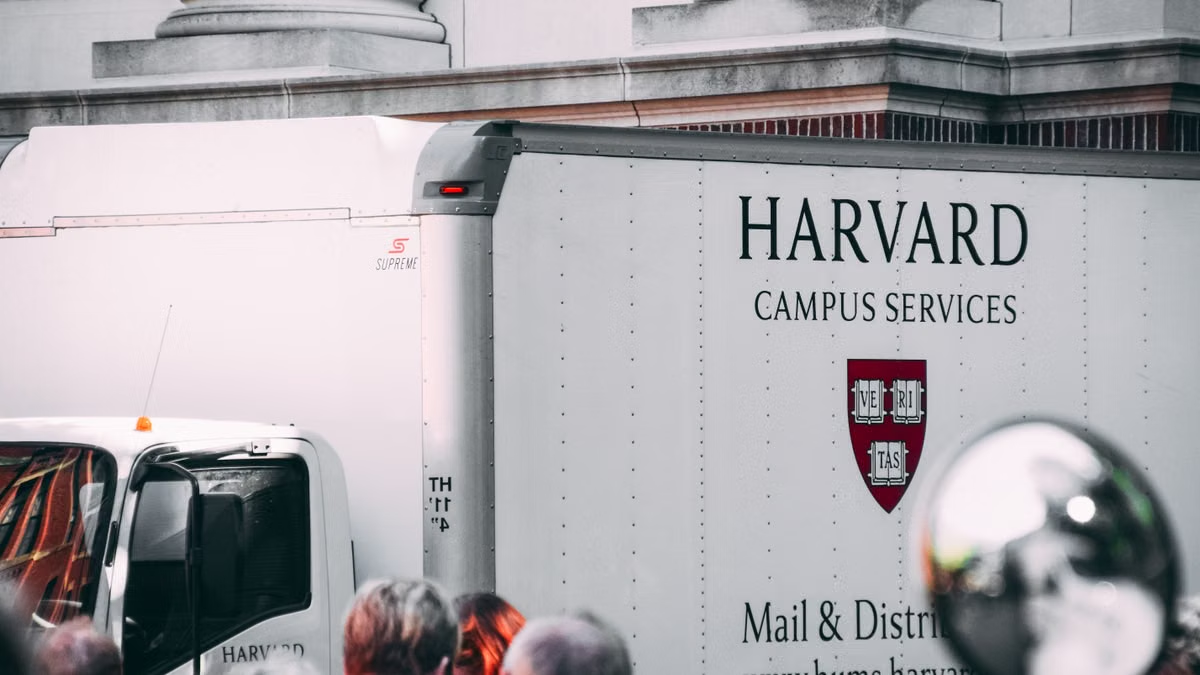
Harvard University
One of the most selective and internationally recognised universities in the world, with deep resources across nearly every field and a name that opens doors well beyond graduation.
- Liberal Arts
- Sciences
- Business
- Law
MIT
A global leader in engineering, computer science, and applied sciences, with tight links to Boston’s biotech and tech industries and an unusually hands-on, project-driven culture.
- Engineering
- Computer Science
- Physics
- Economics
Boston University
One of the largest private universities in the U.S. with a international student body. Estimated 2026 tuition and fees run $71,168/year, the same base rate for domestic and international undergraduates.
- Communication
- Business
- Health Sciences
- International Relations
Also in this pillar
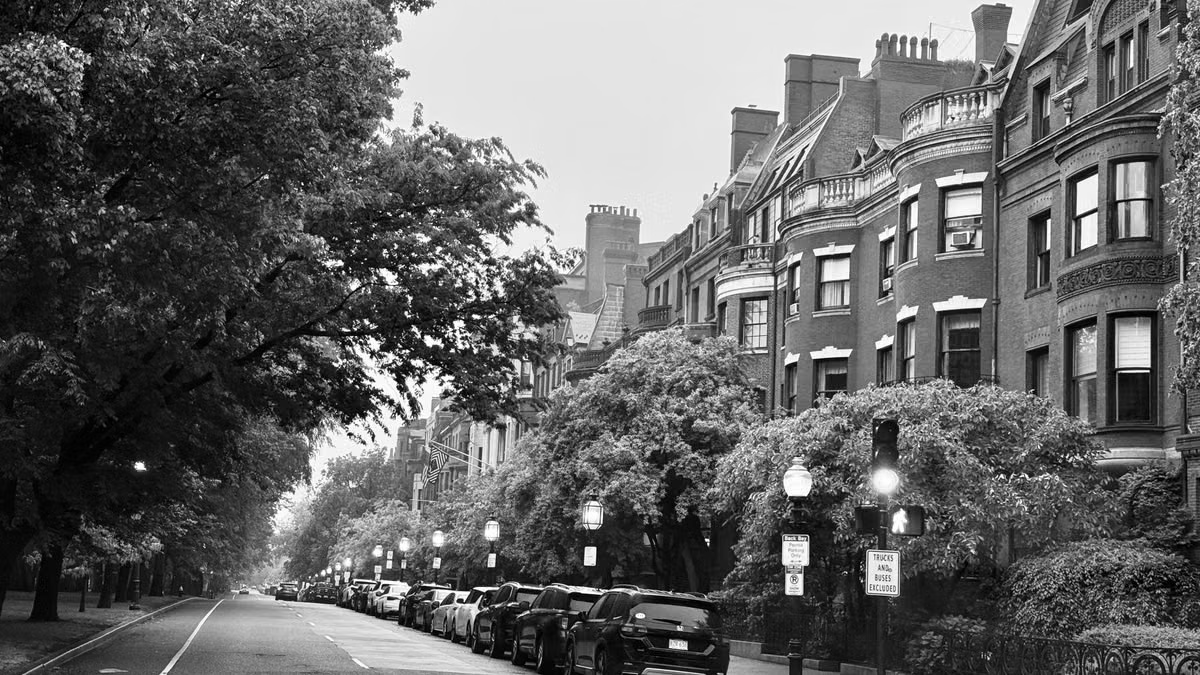
Neighbourhoods to Consider While Studying in Boston
There’s no single right answer here, so we’ve picked four areas that each do one thing particularly well. Whichever priority matters most to you, cost, lifestyle, space, or commute time, one of these should fit.
Allston
Best for Budget-Conscious Students
A well-known student neighbourhood near Boston University and Harvard, with rent noticeably below Back Bay or the Fenway for a comparable unit, at the cost of a slightly rougher edge.
Cambridge
Best for Shortest Commute
Home to both Harvard and MIT, walkable to either campus, with a strong academic and cafe culture, though rent runs high given the direct campus access.
Somerville
Best for Social & Cultural Life
A lively, arts-oriented city bordering Cambridge, connected by the Red Line and several bus routes, popular with graduate students wanting some distance from undergraduate campus life.
Jamaica Plain
Best for Grad Students Wanting Space
A quieter, more residential Boston neighbourhood with real green space around Jamaica Pond, typically offering more space for the money than areas closer to downtown.
How We Score This
Each category is rated on a five-point scale: Excellent, Very Good, Good, Mixed, or Significant Challenges. We use qualitative bands, and no decimal scores, because factors like student lifestyle or housing quality don’t reduce to a single comparable number from any one source. Ratings reflect research across publicly available information, and specific facts such as tuition figures and visa timelines are cited directly where they’re used.
Overall Student Experience Score
Very Good
An outstanding option for students prioritising research access and academic density, backed by excellent healthcare and education. The main trade-offs to plan around are cost of living and the housing search, not academics or safety.
Where to Go From Here
-

The Pre-Departure Checklist for International Students
The month before you leave decides how smooth the first month abroad feels. This checklist turns a daunting departure into…
-

How to Sort Your Finances Before You Study Abroad
Money problems abroad are usually planning problems in disguise. Here is how to set up your finances before you leave,…
-

The Student’s Guide to Beijing
Two of the highest-ranked universities in Asia, remarkably affordable tuition, and a deep immersion in Mandarin. Here’s what studying in…
-
The Student’s Guide to Tokyo
Internationally ranked universities, unusually affordable tuition, and one of the best transit systems in the world. Here’s what studying in…
-

How to Make Your First Weeks Abroad Go Smoothly
The first weeks in a new country set the tone for the whole experience. Here is how to spend them…
-
The Student’s Guide to Philadelphia
An Ivy League education at the same price as everyone else, genuine history on every block, and real affordability next…