

Checklist · 8 min read
Key Takeaways
- Start your shortlist 12–18 months out, the same lead time a domestic application needs, plus room for visa and language requirements on top.
- Language test scores (IELTS, TOEFL, or a programme-specific equivalent) often have their own registration deadlines separate from the application itself.
- Visa processing timelines vary enormously by country and can take months. Confirm the actual timeline directly, never assume a standard window.
- Housing deposits and health insurance enrolment are easy to leave until the last month and are exactly the items most likely to cause a delay.
The short answer: a study abroad application has everything a domestic one does, plus visa, language testing, and housing on a timeline that starts earlier and has less room for error. Work through the five phases below in order and nothing gets left for the final month.
Earliest start→Departure
18 Months Out
Research & Build Your Shortlist
Compare programmes on academic fit first, then narrow by the practical factors that determine whether you can go: visa pathway, cost of living, and language of instruction.
- List 8–12 countries or programmes that fit your field and goals
- Check each country’s visa pathway and typical processing timeline for students
- Confirm the language of instruction and any required proficiency level
- Research total cost of living, not just tuition, for each shortlisted location
- Narrow to a final list of 3–5 programmes
14 Months Out
Language Testing & Academic Requirements
Register for language tests early. Seats fill up in popular testing windows, and a low score with no time to retake can quietly end an otherwise strong application.
- Confirm which language test each programme accepts (IELTS, TOEFL, or equivalent)
- Register for a test date with enough runway to retake once if needed
- Audit academic prerequisites specific to each programme
- Request official transcripts translated if required
10 Months Out
Applications & Recommendation Letters
Foreign application portals and required documents vary more than domestic ones do. Confirm the exact document list per programme. Requirements are seldom standardised.
- Confirm the exact document checklist for each programme (varies more internationally than domestically)
- Request recommendation letters at least six weeks before your earliest deadline
- Draft and revise your personal statement or motivation letter
- Submit applications with confirmation of receipt for each
6 Months Out
Visa, Funding & Housing
This phase has the least room for delay. Visa processing in particular can take far longer than expected, and it cannot start until you have an admission offer in hand.
- Begin the student visa application as soon as you have an offer letter
- Confirm funding: scholarships, loans, or family funding fully arranged
- Research housing options and application or deposit deadlines
- Confirm health insurance requirements for your destination
Final 2 Months
Final Preparation & Departure
The details that feel minor now (a bank account, a phone plan, a copy of every document) are exactly what’s hardest to sort out after you’ve already left.
- Confirm visa approval and collect all physical travel documents
- Finalize housing and confirm move-in date
- Set up international banking or confirm your existing bank works abroad
- Book flights with enough buffer before your programme’s official start date
- Make copies (physical and digital) of every key document
Frequently Asked Questions
How far in advance should I start if my target country has a long visa timeline?
Start the whole process earlier than 18 months if you already know the visa timeline runs long. Some countries take several months to process a student visa alone, and that clock can’t start until after you’re admitted, so a long visa timeline compresses everything before it.
Do I need a language test if my programme is taught in English?
Often yes, even in non-English-speaking countries, if the specific programme is taught in English. Confirm directly with each programme. This is a common and costly assumption to get wrong.
Can I apply for housing before my visa is approved?
In most cases yes, and it’s often smart to start the housing search early since availability can be limited close to programme start dates. Just confirm any deposit’s refund policy in case your visa timeline shifts.
What if my funding isn’t fully confirmed by the 6-month mark?
Flag this immediately. Waiting narrows the options. Many visa applications require proof of funding, so an unresolved funding gap at this stage can delay or block the visa step entirely.
Should I use this checklist even if I’m going through an exchange programme instead of a full degree?
The same five phases apply, though exchange programmes often have shorter overall timelines and simpler visa categories. Confirm your specific programme type’s requirements, since exchange and full-degree visas are frequently different processes.
Where to Go From Here
-

What Is a Legacy Admission?
Legacy admission’s actual weight ranges from a minor tie-breaker to a real factor, and a growing number of schools have…
-

The Complete Guide to Preparing a Competitive University Application
A competitive application isn’t built in the final months before deadlines, it’s built over years of deliberate, coherent choices. Here’s…
-
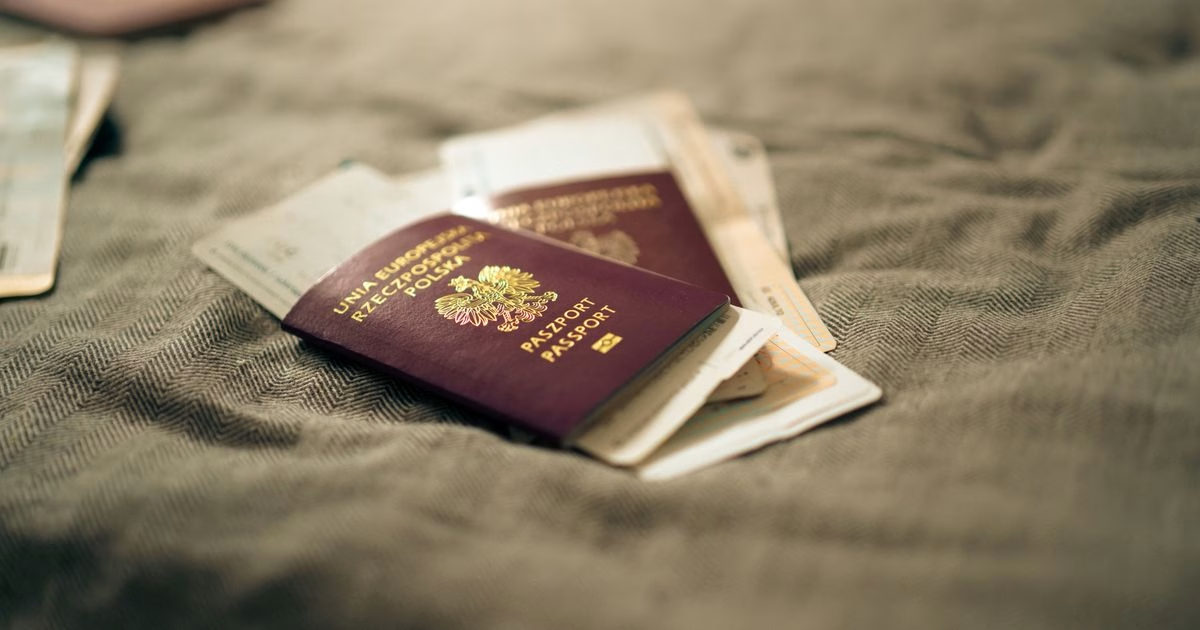
The Student Visa Document Checklist
A student visa is usually refused or delayed over missing or unclear documents, not over the student. This checklist covers…
-

The College Shortlist Checklist
A strong college list isn’t the schools with the best reputation, it’s the smallest list that still covers your realistic…
-

How to Prepare for Your Student Visa Interview
The student visa interview is short, but it decides a lot. Here is how to prepare so a few minutes…
-

Public School vs. Private School: Which Fits Your Child’s Path?
There’s no universal winner between public and private schooling. A side-by-side look at cost, structure, and outcomes, plus a way…