

How-To Guide · 7 min read
Key Takeaways
- Ask 6–8 weeks before the deadline. Professors need real time to write something specific, not a rush job.
- The professor who knows your work best beats the professor with the most impressive title.
- Hand them a “brag sheet”: your best paper, your goals, and every programme deadline in one place.
- A polite reminder two weeks out is expected professional practice, and most professors welcome it.
In This Guide
The short answer: ask the professor who can speak to your actual work, ask at least six weeks before your first deadline, and make the request as easy as possible to say yes to. Everything else in this guide is the specifics of how, including two email templates you can adapt today.
Pick the right professor, not the most famous one
Admissions committees can tell the difference between a letter full of specifics and one that reads like a form letter with your name swapped in. The professor who ran a seminar you contributed to, supervised your thesis, or watched you improve over a semester will always write a stronger letter than a department chair who barely knows your name.
If you’re choosing between two, pick the one who can describe a specific moment: a question you asked, a project you pushed further than required, a time you handled critical feedback well.
Make the ask properly: in person or by real email
Never send a mass email to five professors hoping three say yes. Ask each one individually, ideally in office hours or a short meeting, with a follow-up email that puts everything in writing. If you can’t meet in person, a personal, specific email is a completely acceptable substitute; a generic one is not.
Pro TipOpen with “Would you be comfortable writing me a strong letter.” The word “strong” gives them a graceful way to decline if they can’t honestly write one, which protects you from a lukewarm letter later.
Hand them a complete package, don’t make them chase you
The single biggest favour you can do a busy professor is remove all the friction. Send one email or document with: your resume/CV, the specific programmes and deadlines, a short note on why you’re applying to each, and (this is the part most students skip) a one-page “brag sheet” reminding them of the work you did together.
Make “yes” the easy answer
Give clear deadlines with buffer built in. Set your stated deadline a week ahead of the real one. If a programme uses a portal, send the direct submission link, not just the programme’s homepage. The less a professor has to figure out on their own, the more likely, and more promptly, they’ll say yes.
Follow up like a professional, not a nag
One polite check-in about two weeks before the deadline is completely normal. Professors expect it and won’t be offended. Keep it short: a one-line reminder of the deadline and an offer to resend any materials. Avoid following up more than once unless the deadline is close.
Pro TipIf a portal shows a letter as “not yet received” 3–4 days before the deadline, that’s the right moment for a gentle nudge; earlier just adds noise.
Close the loop: say thank you and report back
A short thank-you note after they submit is basic courtesy, but the detail most students miss: tell them what happened. A follow-up email months later saying you got in, and that their letter helped, makes it far easier to ask again for a job or a second graduate programme down the road.
Frequently Asked Questions
Is it too late to ask if the deadline is only 3 weeks away?
Not too late, but it changes how you should ask. Be upfront about the tight timeline in your first message, offer to send everything immediately, and be understanding if a professor says they can’t do it justice on short notice. That’s better for you than a rushed, generic letter.
What if I don’t have a professor who knows me well?
Start building that relationship now, even with a shorter runway: attend office hours, ask a substantive question after class, or offer to discuss a project further. A professor who’s spoken with you meaningfully even two or three times can usually write a more specific letter than one who only has your final grade to go on.
Should I ask by email or in person?
In person or during office hours is slightly stronger because it’s harder to decline face-to-face and it opens a real conversation about your goals, but a thoughtful, specific email is a fully acceptable substitute, especially for remote or online-heavy programmes.
How many recommendation letters do I actually need?
Most graduate programmes ask for three. Check each programme’s requirements directly rather than assuming: some ask for two, some allow a fourth “optional” letter, and portals vary in whether they accept extras.
What do I do if a professor says no?
Thank them for their honesty and move to your next choice. A decline almost always means they couldn’t write a strong letter, which is exactly the outcome you want to avoid. It’s not personal, and it’s far better to hear it now than after they’ve submitted something lukewarm.
Where to Go From Here
-

The Graduate School Application Checklist: Every Deadline and Milestone in Order
Getting into a graduate programme and getting into a good one are two different projects. Here’s the deadline-by-deadline order that…
-
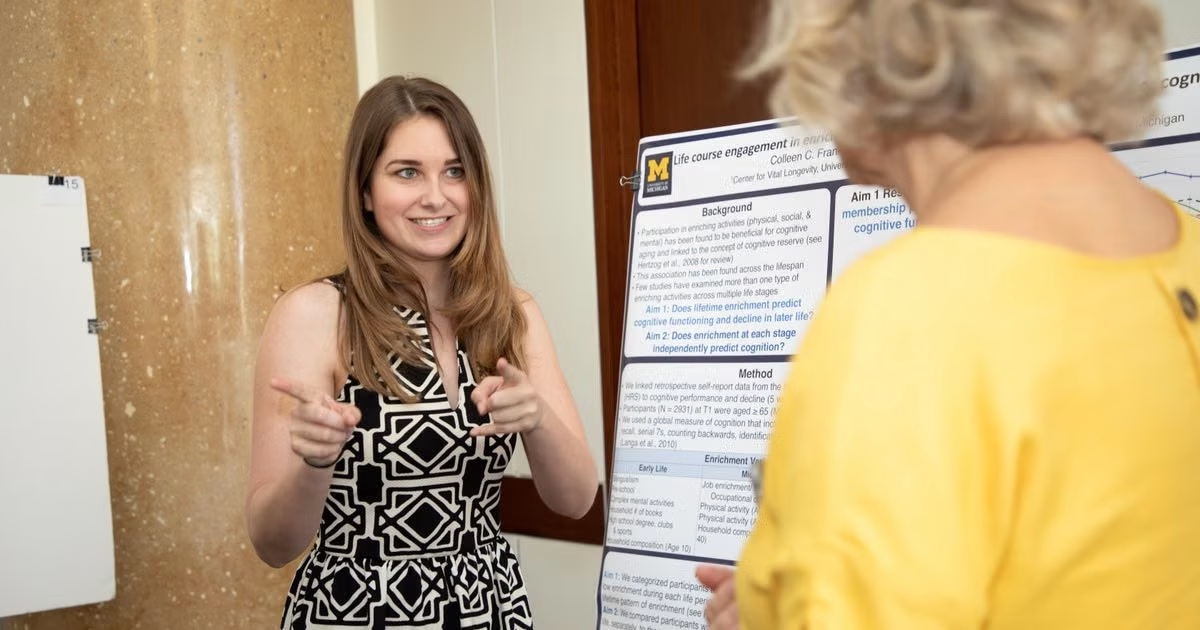
What Is a Thesis Defense?
A thesis defense mostly tests whether you understand your own work, not whether the underlying idea was good, that’s already…
-

Self-Taught AI Skills vs. a Formal Credential
One path costs less and moves at your pace, the other buys you a recognised signal. Here’s how self-taught AI…
-

How to Write a Statement of Purpose That Doesn’t Sound Like Everyone Else’s
Admissions committees read hundreds of statements that open with a childhood memory and close with “I know I’m ready.” Here’s…
-

The Complete Guide to Planning Your Graduate School Application Timeline
Most graduate applications don’t fail on qualifications, they fail on sequencing. Here’s the full 18-month arc, so nothing on your…
-

Is Further Education Actually Worth It? A Real ROI Framework
“Is it worth it” depends entirely on which specific programme, which specific goal, and which specific alternative you’re comparing it…