

City Guide · 12 min read
Tech and start-up careersBay Area universitiesEntrepreneurshipSTEM internshipsMild year-round climateInnovation-driven culture
San Francisco sits at the centre of the Bay Area, the global heart of the technology industry and home, within reach, to some of the world’s leading universities: Stanford, the University of California, Berkeley, and the University of San Francisco. For students aiming at tech, entrepreneurship, or STEM research, the internship and start-up access here is close to unmatched. The trade-off is severe cost: San Francisco and the wider Bay Area have among the most expensive housing markets in the world, and that reality shapes every student’s budget from day one.

Country Context: United States
- Student Visa: Most international students study on an F-1 visa, applied for after receiving an I-20 from a SEVP-approved university and paying the SEVIS fee, then attending a consular interview.
- Post-Study Work Rights: F-1 students are generally eligible for 12 months of Optional Practical Training (OPT) after graduation; those with an eligible STEM degree can apply for a 24-month STEM OPT extension, up to 36 months of work authorisation in total, a route heavily used in the Bay Area’s tech sector.
- Primary Language: English, in one of the most internationally minded regions of the US, with large immigrant and international communities throughout the Bay Area.
- Healthcare System: The US has no universal public healthcare; universities generally require students to hold health insurance, often through a university-sponsored plan, and costs can be high without it.
Key Takeaways
- F-1 students get 12 months of OPT after graduating, extended to 36 months total for eligible STEM degrees, which the Bay Area’s tech employers use heavily.
- UC Berkeley’s nonresident tuition and fees run around US$54,858 for 2026-27, with Stanford around US$65,000 and the University of San Francisco around US$60,000.
- Housing is the defining challenge: the Bay Area is one of the most expensive rental markets on earth, so most students share and many look to the East Bay.
- Internship and start-up access in technology and STEM is close to unmatched anywhere, which is much of what makes the region’s high cost worthwhile.
Education
Excellent
Stanford and UC Berkeley are among the strongest universities in the world, especially in STEM and entrepreneurship, with the University of San Francisco adding a well-regarded option in the city itself.
Cost of Living
Significant Challenges
Among the most expensive places to live in the US; rent dominates, and daily costs are high, so students must plan carefully rather than expect to economise their way around it.
Housing
Significant Challenges
One of the world’s tightest and priciest rental markets; most students share, and many choose the more affordable East Bay, accepting a longer commute in exchange for liveable rent.
Transportation
Good
BART, Muni, and Caltrain connect the city and wider Bay Area, though the region is more car-oriented than New York, and cross-bay commutes can be long.
Safety
Mixed
Safety varies sharply by neighbourhood; many areas are perfectly comfortable, while a few central districts warrant more caution, so local knowledge matters when choosing where to live.
Healthcare
Mixed
World-class hospitals and university medical centres, but the lack of universal coverage means students rely on insurance, and out-of-pocket costs without it can be steep.
Employment & Work Opportunities
Excellent
The global centre of the technology industry, giving students unrivalled access to internships, start-ups, and research, backed by the STEM OPT route many local employers actively use.
Student Lifestyle
Very Good
A compact, walkable city with a strong food scene, easy access to nature and the coast, and a culture built around innovation and ideas, if a less traditional student-town feel.
Climate
Very Good
A mild, temperate climate year-round, cool and famously foggy in summer, but rarely extreme in either direction, and comfortable for most of the year.
Student Essentials
Monthly Budget
- Accommodation (shared room)$1,500
- Food$500
- Transit (Clipper card)$90
- Phone & Internet$70
- Entertainment$280
- Total$2,440
Working While Studying
- Hours Allowed: F-1 students may generally work on-campus up to 20 hours per week during term, and off-campus work usually requires specific authorisation such as CPT or OPT tied to their programme.
- Common Jobs: On-campus roles, research assistantships, and internships (via CPT) at the Bay Area’s abundant tech companies and start-ups, a genuine pipeline toward OPT and full-time roles.
- Tax Notes: Working students need a Social Security Number and must file US taxes; international students have specific rules, so it’s worth understanding your status early.
Scholarships
Application Routes Worth Knowing
- University Need- and Merit-Based Aid: Stanford offers generous need-based aid, though international undergraduate funding is limited and highly competitive; the public UC system offers less to non-residents, so check each university’s specific policy.
- External and Country-Specific Scholarships: Many students combine home-country government scholarships, Fulbright and similar exchange programmes, and private awards to help meet the Bay Area’s very high total cost.
- Departmental and Research Funding: Graduate students in STEM fields often access research assistantships and departmental funding that can substantially offset costs, especially at the research-intensive universities.
Visa Requirements
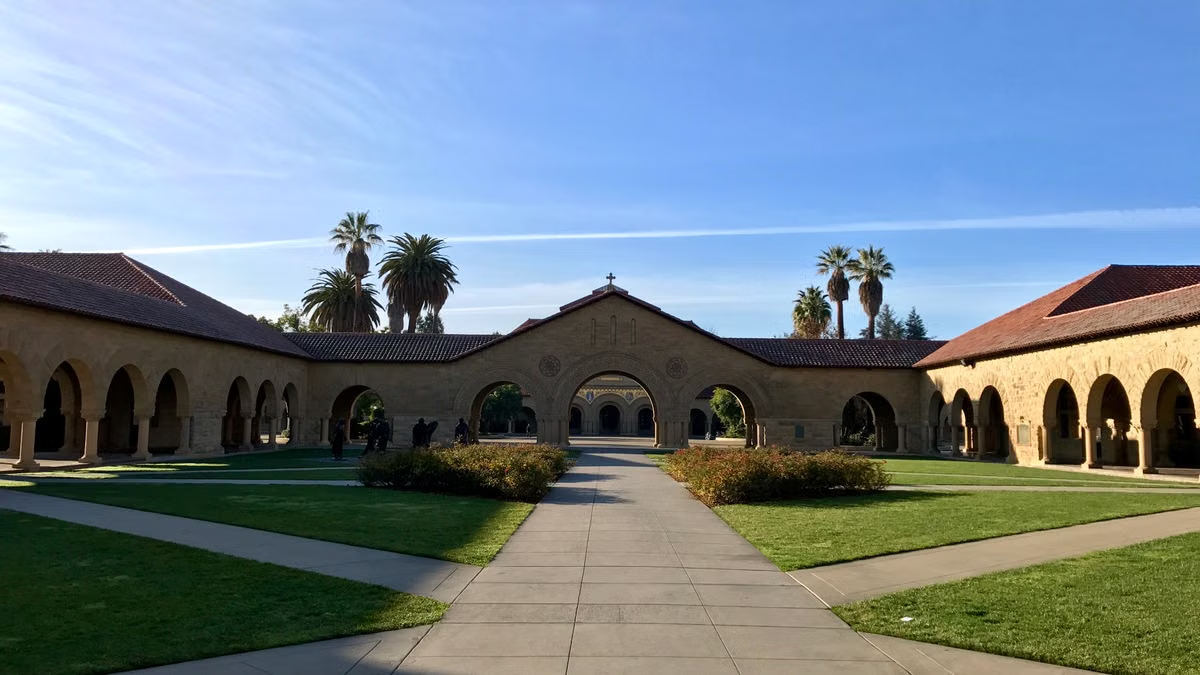
Stanford University
One of the world’s leading universities and a birthplace of Silicon Valley, with undergraduate tuition around US$65,000, exceptional in engineering, computer science, and entrepreneurship.
- Computer Science
- Engineering
- Business
- Sciences
University of California, Berkeley
A top public research university across the bay, with nonresident tuition and fees around US$54,858 for 2026-27, world-class in the sciences, engineering, and social sciences.
- Engineering
- Computer Science
- Sciences
- Economics
University of San Francisco (USF)
A private university in the city itself, with tuition around US$60,000, known for business, nursing, and a strong sense of social mission, a more intimate alternative in central SF.
- Business
- Nursing
- Computer Science
- Law

Neighbourhoods to Consider While Studying in San Francisco
There’s no single right answer here, so we’ve picked four areas that each do one thing particularly well. Whichever priority matters most to you, cost, lifestyle, space, or commute time, one of these should fit.
Inner Richmond / Haight-Ashbury
Best for Shortest Commute
The areas around the University of San Francisco, walkable to campus, leafy, and quintessentially San Franciscan, though rents reflect their central appeal.
The Mission / SoMa
Best for Social & Cultural Life
Vibrant, food-and-nightlife-rich districts at the heart of the city’s cultural and start-up life, lively and central, and priced accordingly.
Oakland / East Bay
Best for Budget-Conscious Students
Across the bay and connected by BART, generally more affordable than the city and close to UC Berkeley, a popular choice for students trading commute time for liveable rent.
Outer Sunset
Best for Grad Students Wanting Space
A quieter, foggier residential district near the ocean, offering more space for the money at the cost of a longer commute into the central university areas.
How We Score This
Each category is rated on a five-point scale: Excellent, Very Good, Good, Mixed, or Significant Challenges. We use qualitative bands rather than decimal scores because factors like student lifestyle or housing quality don’t reduce to a single comparable number from any one source. Ratings reflect research across publicly available information, and specific facts such as tuition figures and visa timelines are cited directly where they’re used.
Overall Student Experience Score
Excellent
An outstanding choice for students aiming at technology, entrepreneurship, or STEM research, with world-class universities and unrivalled industry access, if you can plan around a punishing cost of living. Housing is the trade-off to manage: share, consider the East Bay, and budget honestly.